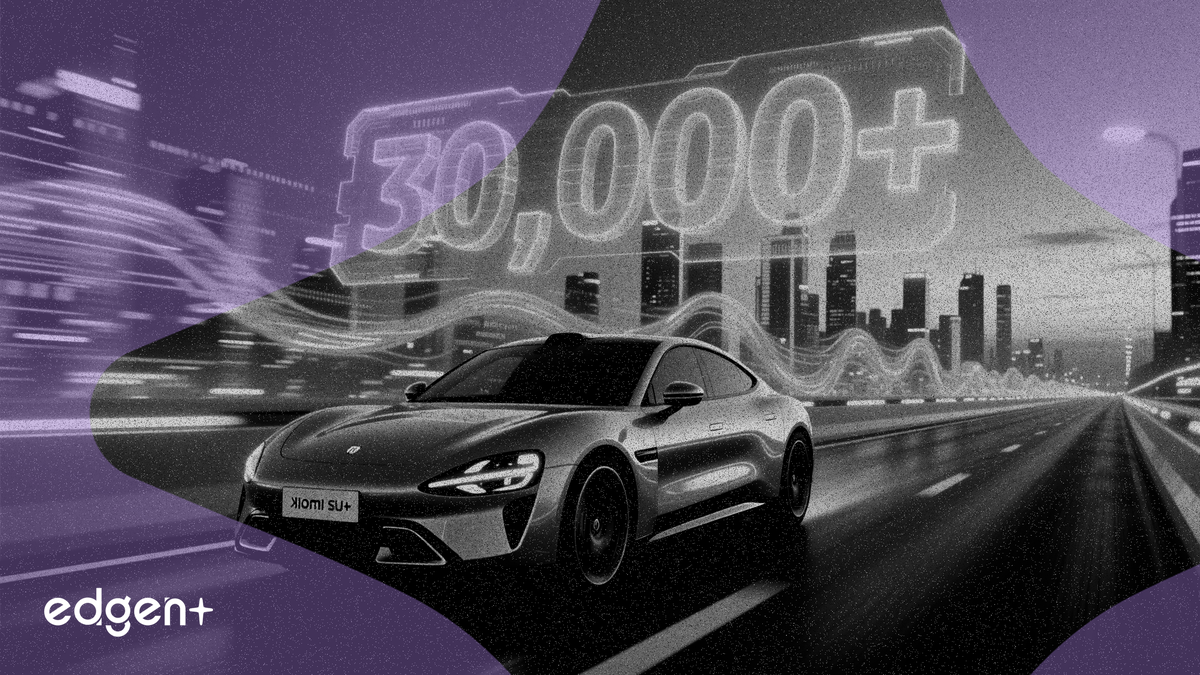
Xiaomi's EV business delivered more than 30,000 vehicles for a second consecutive month in May, sustaining the production momentum needed to challenge established rivals in China's competitive electric-vehicle market.
Xiaomi Auto delivered more than 30,000 vehicles in May, its second straight month above that threshold, as the smartphone maker's EV unit scales production in a market where maintaining volume has proven difficult for most newcomers.
"Sustaining deliveries above 30,000 units for two consecutive months shows Xiaomi has moved past the initial production bottleneck phase," said Lucas Herrera, EV supply chain analyst at Edgen. "The next challenge is converting this volume into narrowing unit losses."
The May figure follows April's performance above 30,000 units, confirming Xiaomi's production system has stabilized after the initial ramp-up of its SU7 sedan. The company has not disclosed the exact delivery count or a month-over-month comparison. Xiaomi's EV business continues to operate at a loss — $457 million in the most recent reported period — as it prioritizes market share over profitability in a price war that has squeezed margins across the industry.
For Xiaomi (1810.HK), sustained volume above 30,000 units is critical to absorbing fixed costs and narrowing per-vehicle losses. The company's EV ambitions have added a growth narrative to its smartphone and IoT businesses, but investors are watching whether the unit can reach breakeven before the price war erodes its cash position. BYD delivered roughly 330,000 passenger EVs in May, highlighting the scale gap Xiaomi must close.
Xiaomi entered the EV market in March 2024 with the SU7, a sporty sedan positioned against the Tesla Model 3 and BYD Seal. The company has since expanded production capacity at its Beijing factory, targeting annual output of 200,000 to 300,000 units. Sustained monthly deliveries above 30,000 would put Xiaomi on track for roughly 360,000 vehicles annually — still a fraction of BYD's 4.2 million units in 2025 but enough to rank among China's top 10 EV makers by volume.
The Price War Squeeze
China's EV market has seen average selling prices decline by roughly 15% over the past 18 months as BYD, Tesla and a dozen domestic startups compete for market share. Xiaomi's SU7 starts at 215,900 yuan ($29,800), positioning it in the most competitive segment of the market. BYD's Seal starts at 179,800 yuan, while the Tesla Model 3 begins at 245,900 yuan. The price pressure means Xiaomi must achieve higher volumes than initially planned to reach unit profitability.
Xiaomi shares have gained roughly 40% over the past 12 months, partly reflecting optimism about its EV business. The stock trades at about 25 times forward earnings, a premium to traditional automakers but a discount to tech peers. Sustained delivery growth supports the bull case, but the $457 million quarterly loss — and the absence of a clear timeline to profitability — keeps the stock in a "show me" phase for most institutional investors.
This article is for informational purposes only and does not constitute investment advice.