


Two of crypto's largest ecosystems are competing for investor attention with diverging tokenomics strategies in Q3.
Two of crypto's largest ecosystems are competing for investor attention with diverging tokenomics strategies in Q3.
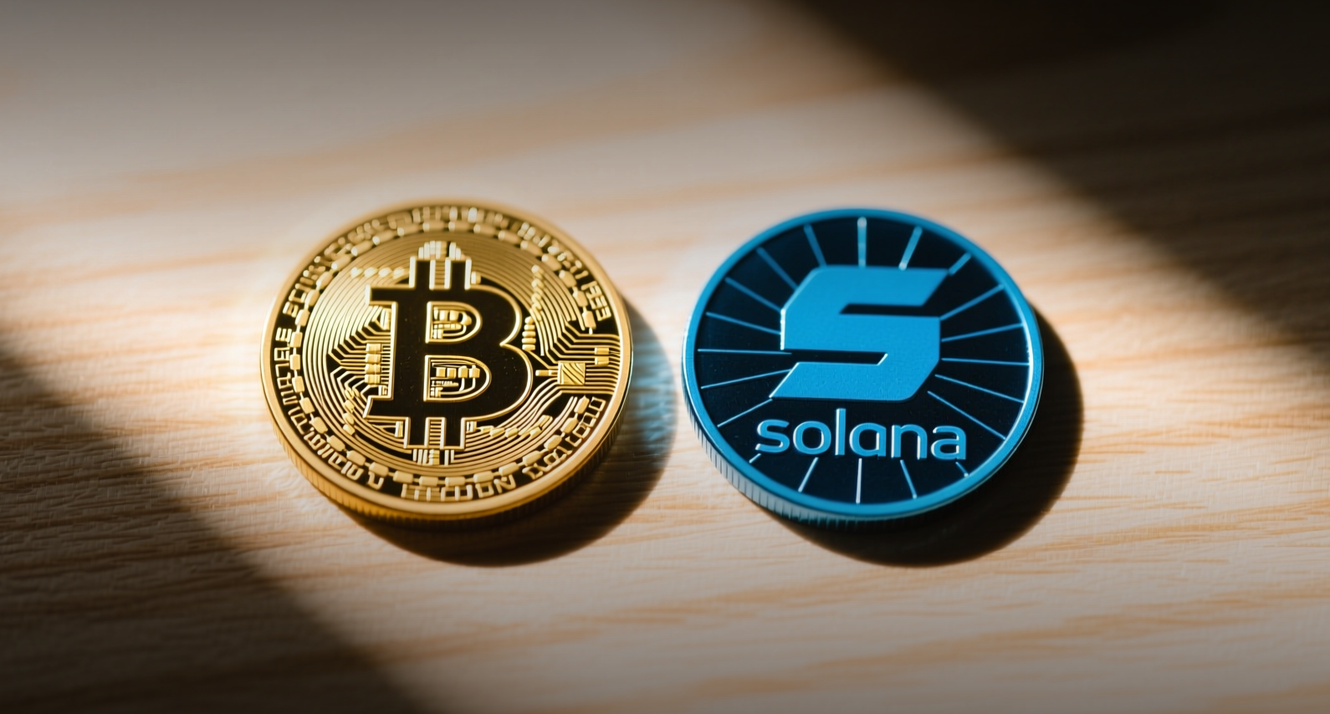
Two of crypto's largest ecosystems are competing for investor attention with diverging tokenomics strategies in Q3.
BNB burned $931 million in tokens July 16 as Solana's real-world asset base hit $3.3 billion, setting up competing Q3 narratives.
The burn removed approximately 1.6 million BNB from circulation, according to BNB Chain's burn tracker, while Solana's RWA base expanded from $1.4 billion in January to $3.3 billion, per DefiLlama data.
Solana now settles more than 95% of the world's tokenized stock trading volume, with $568.1 million in tokenized equities on its chain, up 63% in the past 30 days. BNB's burn, the largest single token destruction event in Q3, reduces circulating supply and strengthens its deflationary tokenomics. Ethereum still leads in total tokenized stock value at $667.9 million, but Solana has been eroding that lead for more than a year.
The divergence matters because both assets compete for the same capital. BNB's supply squeeze could drive price appreciation through scarcity, while Solana's RWA growth attracts institutional inflows. Which narrative dominates will determine relative performance in Q3.
Solana's Institutional Pivot
Solana's RWA growth has attracted major asset managers including Bitwise, State Street, Galaxy and Amundi as issuers. The network's total on-chain RWA base grew from $1.4 billion to $3.3 billion between January and early July, a 130% increase. Solana surpassed Ethereum by holder count in tokenized assets, though Ethereum still holds more total value at $15.9 billion across all RWA categories.
The institutional tilt gives Solana a different growth profile than BNB. While BNB's burn directly benefits token holders through supply reduction, Solana's strategy targets the tokenization market, which could reach trillions of dollars in assets under management over the next decade.
BNB's Supply Squeeze
BNB's $931 million burn is part of a regular quarterly destruction mechanism built into the Binance ecosystem. The burn reduces total supply, creating deflationary pressure that could support price appreciation if demand remains constant. BNB has no equivalent RWA strategy, instead relying on its role as the native token of the Binance exchange and BNB Chain ecosystem.
Solana is also pursuing tokenomics improvements. Proposals SIMD-0553 and SIMD-0550 would lift its daily fee burn from 648 to 7,500 SOL and double the supply reduction from 15% to 30%, respectively. If adopted, these changes would strengthen Solana's deflationary profile alongside its RWA growth.
The Robinhood Wildcard
A potential threat to Solana's RWA dominance emerged July 1, when Robinhood activated 24/7 tokenized stock trading on Arbitrum, a layer-2 chain on Ethereum, rather than on Solana. Robinhood's platform has 28 million customers across 38 countries, generating roughly $157 per funded account annually. If Robinhood's Arbitrum-based offering captures significant tokenization volume, it could slow Solana's RWA growth trajectory.
This article is for informational purposes only and does not constitute investment advice.
