
A new federal law lets victims of federally declared disasters deduct uninsured property losses above a $500 threshold without the usual 10%-of-income limit.
A new federal law lets victims of federally declared disasters deduct uninsured property losses above a $500 threshold without the usual 10%-of-income limit.
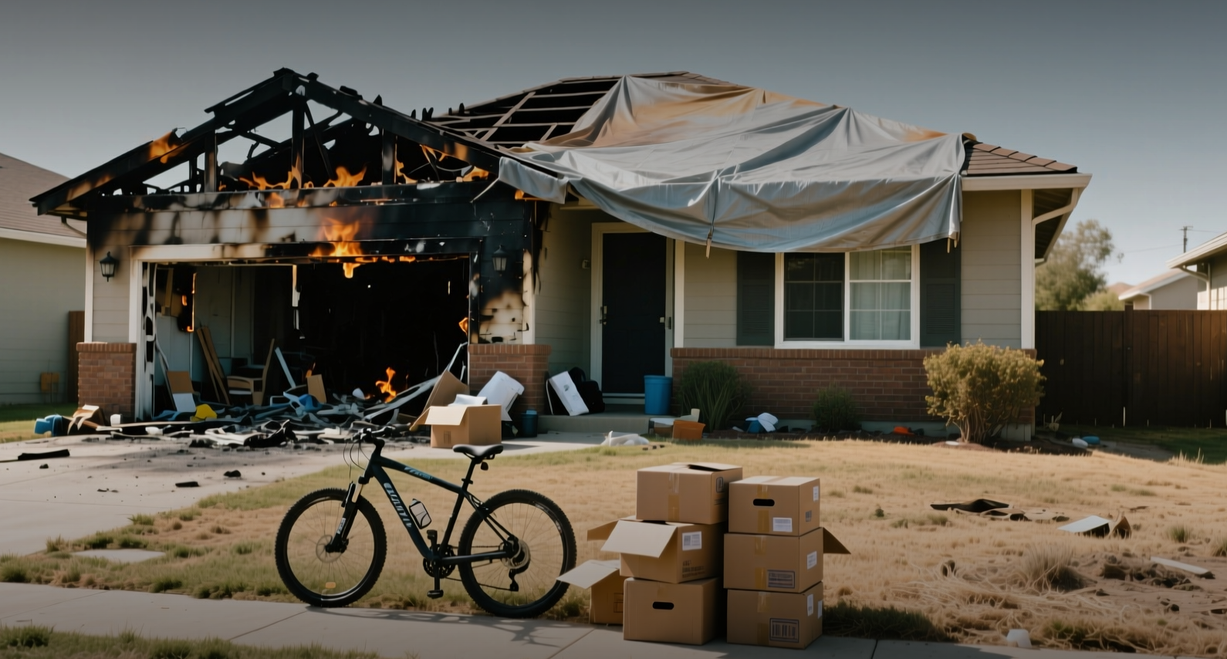
Congress has codified eased casualty-loss deductions for disaster victims, waiving the 10%-of-adjusted-gross-income offset on uninsured losses above a $500 threshold for federally declared disasters beginning before 2026.
"By codifying these provisions into the IRC, Congress is providing clarity to and ensuring consistency for taxpayers affected by federally declared disasters," Daniel Hauffe, senior manager of tax policy and advocacy at the American Institute of CPAs, said.
The Doug LaMalfa Federal Disaster Tax Relief Certainty Act, H.R. 5366, raises the deduction floor to $500 from $100, lets qualified disaster losses be added to the standard deduction, and extends the exclusion of qualified wildfire relief payments through the end of 2026. It applies to federally declared disasters occurring after July 4, 2025, and before Jan. 1, 2027.
The relief mirrors provisions that covered disasters from 2020 through July 4, 2025, but is the first in years to be prospective rather than retroactive. Taxpayers who already filed 2025 returns under the old rules have three years from the filing due date to amend using Form 1040-X.
Computing the loss
A casualty loss equals the smaller of the damaged property's adjusted basis or its decline in value, less any insurance proceeds received or expected. The expanded break is available to taxpayers who claim the standard deduction and to those who itemize on Schedule A of Form 1040; the IRS refers to these as "qualified disaster losses."
The IRS offers safe harbors to simplify the calculation. Homeowners with casualty losses of $20,000 or less may take the lesser of two repair estimates to determine the decrease in home value, and can also use loss estimates in reports prepared by an insurer or a licensed contractor's invoice. A separate safe harbor helps compute the replacement cost of personal belongings destroyed in the disaster. Details appear in IRS Publication 547 and Revenue Procedure 2018-08.
Claiming the loss
For a disaster loss in 2026, taxpayers can claim it on either the 2026 return or the 2025 return, whichever provides the greater benefit. Those who already filed a 2025 return can amend it with Form 1040-X. For 2026 disaster losses, the amended 2025 return is due by Oct. 15, 2027 — six months after the normal filing due date for the year in which the loss occurred.
IRS resources
The IRS provides tax transcripts for taxpayers who lost prior-year returns in a hurricane, fire or other disaster, and maintains a dedicated disaster line at 866-562-5227, in addition to the filing and payment extensions it regularly grants after disasters.
The law benefits homeowners and renters with uninsured damage to houses, cars and personal belongings, while the $500 floor and the removal of the 10%-of-AGI offset make the deduction accessible to middle-income filers who previously could not clear the income threshold. The AICPA has urged Congress to make the relief permanent, warning that the current window leaves a gap for disasters that fall outside the covered dates.
This article is for informational purposes only and does not constitute professional advice; tax rules and figures may change, so verify against the latest official IRS announcement.
