
Huawei's WiFi patent portfolio keeps generating licensing revenue even as U.S. restrictions bar its equipment from American networks.
Huawei's WiFi patent portfolio keeps generating licensing revenue even as U.S. restrictions bar its equipment from American networks.
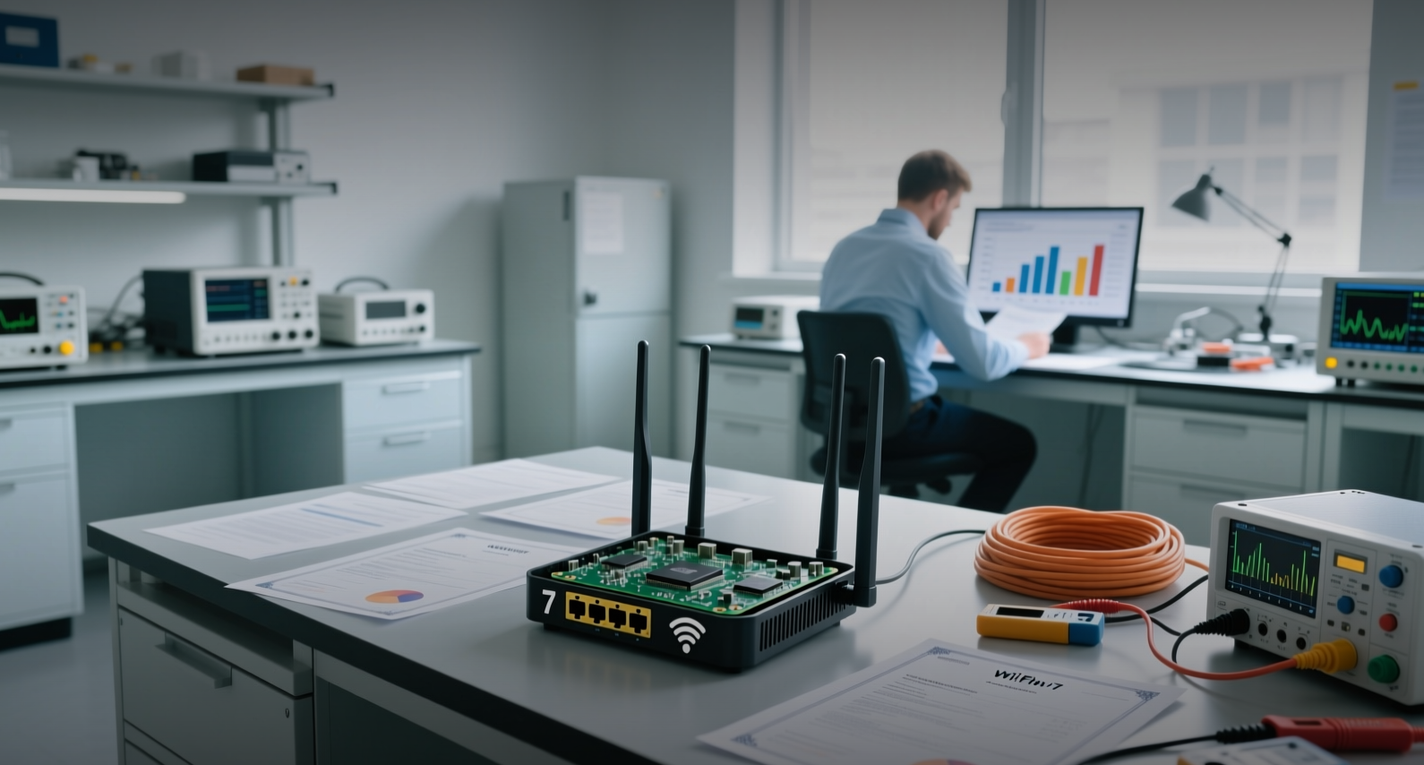
Huawei's WiFi patent portfolio keeps generating licensing revenue even as U.S. restrictions bar its equipment from American networks.
Huawei and HP Inc. signed a multiyear global patent cross-licensing agreement covering WiFi technology, giving the Palo Alto-based PC maker access to Huawei's Wi-Fi 6 and Wi-Fi 7 patents in exchange for reciprocal rights.
"Through patent licensing, Huawei shares its innovation with the industry, particularly in the area of standardized technologies, which brings leading technological experiences to consumers worldwide," Alan Fan, Huawei's chief intellectual property officer, said.
The deal follows a lawsuit Huawei filed against HP at Europe's Unified Patent Court in August 2025 over a Wi-Fi 6 patent. HP joined the Sisvel Wi-Fi 6 patent pool in November 2025, ending legal actions by Huawei and Philips. Huawei set a fee of 50 cents per consumer device using its Wi-Fi 6 technology, and more than 1.6 billion consumer electronic devices, excluding phones, had used its WiFi inventions by the end of 2025, the company said.
HP, the world's second-largest PC maker with a 21.3 percent market share behind Lenovo, per Gartner, described the deal as a routine standard-essential patent license rather than the start of a broader commercial relationship. The agreement shows Huawei remains a major holder of patents used in global wireless standards despite U.S. restrictions that since 2019 have required suppliers to seek government approval before providing certain U.S.-origin technology.
The cross-licensing structure gives both companies rights to use parts of the other's patent portfolio, rather than limiting the arrangement to a one-way license of Huawei's WiFi patents to HP. Neither company disclosed financial terms or the specific patents covered. Steven Geiszler, who represented Huawei in negotiations, said the agreement licenses Huawei patents covering standardized WiFi technologies while obtaining reciprocal patent rights from HP.
WiFi has become one of the most widely used wireless technologies, connecting homes, schools, hospitals, offices and public spaces. Each generation of the standard is developed openly, drawing on technical contributions from companies across the industry. Wi-Fi 6 delivers high speed, large capacity and lower energy consumption, enabling multiple high-definition video streams, gaming and AR/VR services alongside legacy broadband and IoT devices. Wi-Fi 7 builds on that with higher throughput, lower latency and more reliable connectivity for 8K video, gaming, AR/VR, remote work and cloud computing.
The agreement extends Huawei's push to monetize its intellectual property. The company has reached settlements with Amazon and other firms in recent years and says it is among the leading holders of patents needed to implement Wi-Fi 6. The Sisvel pool, which HP joined in November, gives companies access through a single agreement to about 2,000 patents considered necessary for Wi-Fi 6 products. Huawei said the new direct deal covers a broader set of its WiFi patents, including Wi-Fi 7.
For investors, the deal shows Huawei can generate licensing income from its patent portfolio even as U.S. trade restrictions limit its access to advanced semiconductors and software. HP, whose shares trade on the New York Stock Exchange, gains certainty over WiFi patent costs for its laptops and printers, a category where it holds a 21.3 percent global share. The agreement does not represent a broader strategic partnership, HP said, limiting the direct commercial upside for either company.
This article is for informational purposes only and does not constitute investment advice.
