
Kevin Warsh's first Jackson Hole keynote will test whether the Federal Reserve can operate without telling markets what it will do next.
Kevin Warsh's first Jackson Hole keynote will test whether the Federal Reserve can operate without telling markets what it will do next.
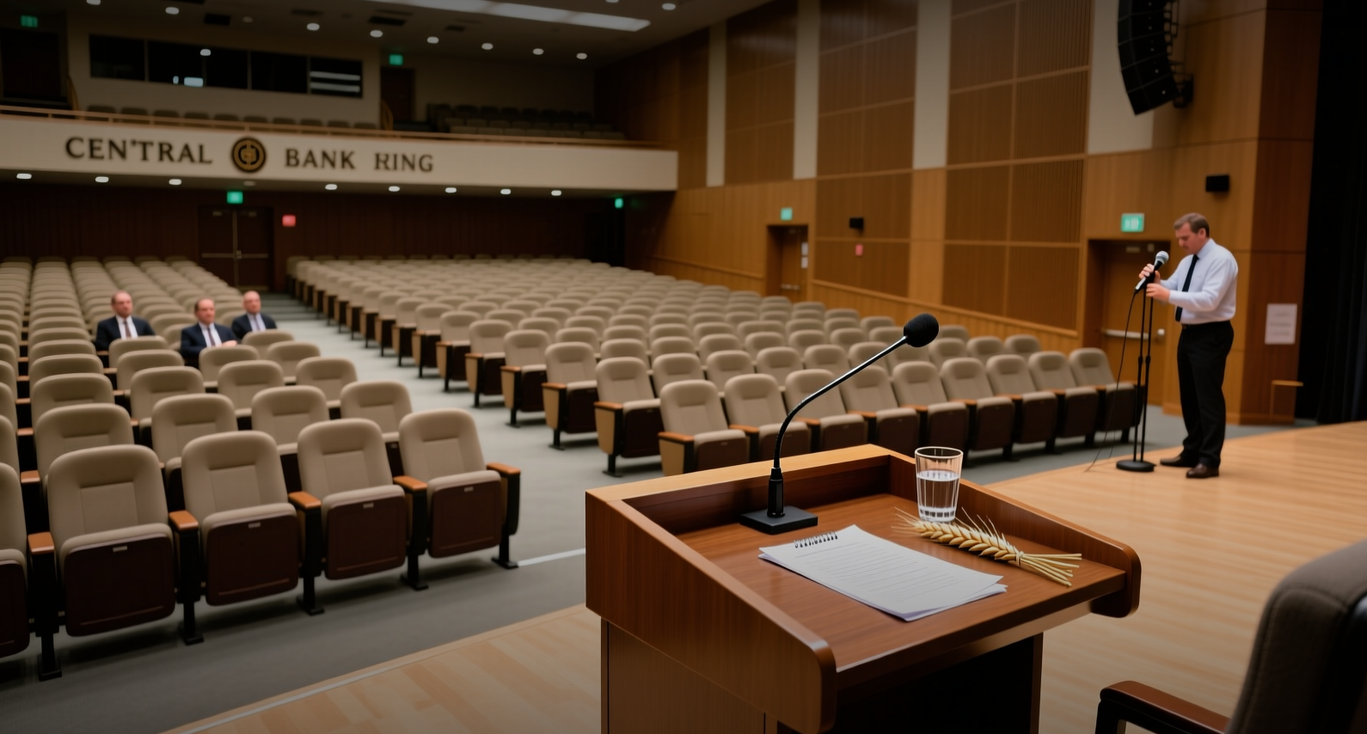
Federal Reserve Chair Kevin Warsh delivers his Jackson Hole debut Friday with rates at 3.5%-3.75% and markets pricing a 34 percent chance of a September hike, yet he has refused to define his reaction function.
"I don't expect any signals to come out of Kevin Warsh's Jackson Hole speech," said Jan Groen, chief US economist at Societe Generale. "And if I'm right, I think the market is not going to like it."
Bond yields have risen since Warsh's July press conference, when he stayed quiet on rates, and long-term Treasury yields surged afterward. Mark Cabana, head of US rates strategy at Bank of America, warned in a client note that a speech confined to big-picture topics — without indicating rate hikes remain on the table — risks being read as dovish, potentially pushing the 30-year Treasury yield to 5.5 percent or above.
The stakes are elevated because the Fed has held rates steady at all five meetings this year as inflation moved further from the 2 percent target during the Iran war. Some of Warsh's colleagues are calling to raise borrowing costs for the first time since July 2023, and investors see the September 15-16 FOMC meeting as the next decision point.
The Reaction Function Gap
Warsh has repeatedly refused to describe what economic circumstances would move rates in either direction — a concept the Brookings Institution defines as "what it is watching, how it interprets the economy, how it weighs competing risks, and what developments would change its judgment." This differs from forward guidance, an explicit projection of the rate path if the economy evolves as expected.
At a July event in Sintra, Portugal, Warsh said the bond market can "actually understand quite well" without a reaction function. A CNBC survey of 31 economists, strategists and investors this week found 80 percent said Warsh should explain his economic views in more detail.
"The bond market is really looking to the Fed for clues on their reaction function," said Ian Kresnak, senior investment strategist at Vanguard. "What's driving a lot of the volatility in the rates market is uncertainty around how the Fed is going to respond to inflation."
A Treasury Complication
Treasury Secretary Scott Bessent's plan to expand the department's weekly debt-buyback program to at least twice its normal size starting September 9 has complicated Warsh's posture. "We're in a unique set of conditions here, where actions by the Treasury have undermined Warsh's move. Therefore, the Fed chair is in between a rock and a hard place," said Joseph Brusuelas, chief economist at RSM.
Rising government deficits and increased corporate bond supply have pushed up yields in recent months, adding to the federal government's $40 trillion pile of debt. Economists are divided on what Warsh will say. Luke Tilley, chief economist at M&T Bank and Wilmington Trust Investment Advisors, anticipates Warsh will sketch out the work of five task forces he established — spanning communications, balance sheet policy, data, productivity and jobs, and inflation frameworks — while sidestepping a granular take on current conditions.
What's at Stake
Warsh has pledged to Congress that the Fed has "no tolerance for persistently elevated inflation" and called for a "regime change" in the central bank's approach. The 2026 symposium's theme is "Financial Innovation: Implications for Payments and Policy."
"It's a close call whether or not they hike at all this year," said Jim Caron, chief investment officer of portfolio solutions at Morgan Stanley Wealth Management. Investors currently see a roughly 34 percent chance Fed officials raise rates at the September 15-16 meeting, according to CME FedWatch.
The last time the Fed raised borrowing costs was July 2023, a 25-basis-point move that took the fed funds rate to its current range. If Warsh stays silent on rates Friday, investors will have to live with less guidance — a shift that could keep long-dated yields elevated into the September meeting.
This article is for informational purposes only and does not constitute investment advice.
