
US strikes on three Iranian tankers near Kharg Island after Iran targeted two Navy warships left Bitcoin trading above $78,000 as traders weighed Gulf crude-supply risk against the token's role as a hedge.
US strikes on three Iranian tankers near Kharg Island after Iran targeted two Navy warships left Bitcoin trading above $78,000 as traders weighed Gulf crude-supply risk against the token's role as a hedge.
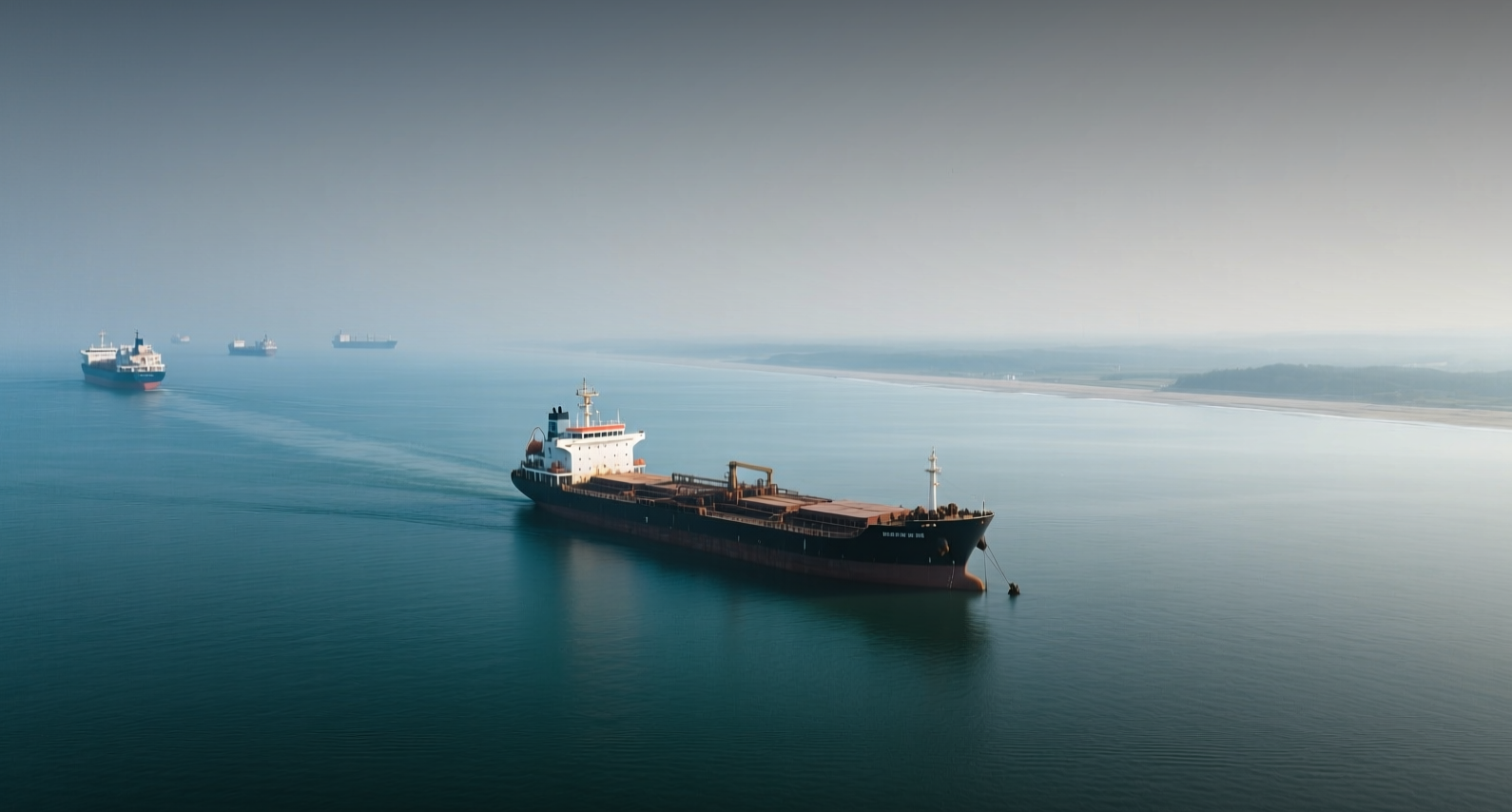
Bitcoin held above $78,000 as US forces struck three Iranian oil tankers near Kharg Island after Iran fired ballistic missiles at two Navy warships.
"If you shoot at two of our ships, we will impose an even higher economic cost — taking out three of yours," Adm. Brad Cooper, commander of US Central Command, said in a statement confirming the strikes Saturday.
CENTCOM said it permanently disabled the crude carriers M/T Downy off Kharg Island and M/T Stark 1 near Jask, and destroyed the unladen M/T Kylo in the Gulf of Oman. Kharg Island handles roughly 90 percent of Iran's crude exports, per Reuters, so any attack near the terminal carries supply implications beyond a single vessel. Brent crude traded near $96.28 a barrel on the escalation, and ship-tracking data cited by Reuters showed commodity transits through the Strait of Hormuz falling to five vessels on a recent Saturday from 31 a week earlier, against a pre-conflict norm of more than 130 a day.
The test for crypto traders is whether $78,000 holds as a floor if the exchange of strikes widens. A sustained disruption to Persian Gulf crude — Saudi Arabia, the UAE, Kuwait and Iraq all ship through Hormuz — would lift energy prices and could push risk assets, including Bitcoin, toward lower support even as some investors treat the token as a hedge against the fallout.
The strikes followed a Sept. 1 wave of US attacks on IRGC air-defense, radar and maritime targets inside Iran, which President Donald Trump warned would escalate if Tehran retaliated. Iran instead kept firing, launching the ballistic missiles that drew Saturday's tanker response. No American personnel were injured, and Iranian media reported no casualties among the tanker crews.
For Bitcoin, the macro transmission runs through energy prices and the dollar. A spike in crude that feeds inflation would complicate any case for looser monetary policy, a factor that has historically weighed on digital assets priced in dollars. The token's resilience above $78,000 so far suggests traders are reading the Gulf escalation as contained rather than systemic, though the level remains the line in the sand if shipping through Hormuz deteriorates further.
Ether and the broader altcoin complex have tracked Bitcoin's range-bound tone rather than diverging, leaving the $78,000 zone as the market's primary gauge of whether the conflict spills into a broader risk-off move. A decisive break below that level would open the door to a retest of prior lows, while a hold would reinforce the view that Bitcoin is absorbing geopolitical shocks the way gold historically has.
This article is for informational purposes only and does not constitute investment advice.
