
Key Takeaways:
- China's May CPI rose 1.2% year-on-year, matching April's reading
- Core inflation remained subdued, reflecting weak consumer demand
- The steady data gives the PBOC room to maintain accommodative policy
Key Takeaways:
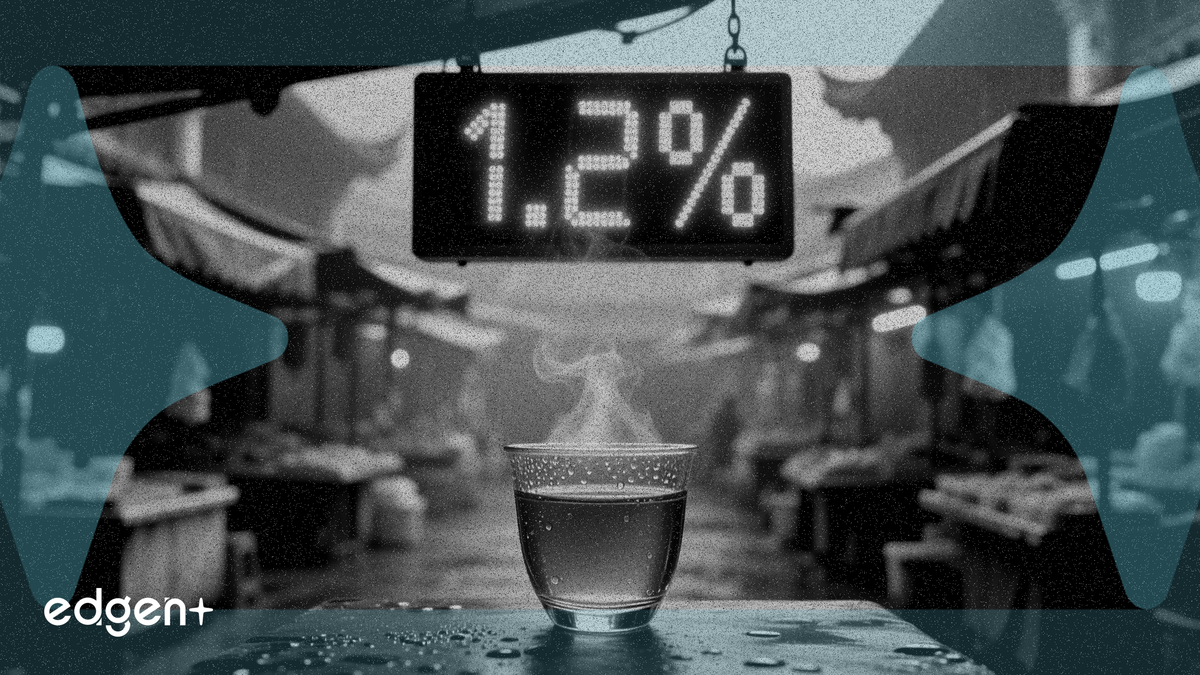
China's consumer inflation held at 1.2% for a second month, signaling stable prices but also persistent weakness in domestic demand.
China's consumer price index rose 1.2% in May from a year earlier, matching April's reading and showing the challenge of reviving domestic spending as the world's second-largest economy navigates a fragile recovery.
"The flat reading reflects a tug-of-war between stabilizing food costs and still-weak consumer confidence," said Kevin Ip, macro analyst at Edgen. "Beijing needs to see demand-side momentum pick up before inflation trends higher."
The May figure held steady against the 1.2% recorded in April, according to the National Bureau of Statistics. Core CPI, which strips out volatile food and energy prices, remained subdued — a sign that households are still cautious with discretionary spending. Food prices, a key swing factor in China's CPI basket, provided some support as pork costs stabilized after months of decline.
The persistent below-target inflation gives the People's Bank of China room to maintain its accommodative stance without overheating concerns. Markets now price a higher probability of further monetary easing, including a potential reserve requirement ratio cut, as policymakers seek to stimulate credit demand and lift consumer sentiment.
Consumption Remains the Missing Link
China's retail sales data for May, due later this month, will offer the next major clue on whether household spending is responding to stimulus measures. Analysts expect sales growth to remain in the low-to-mid single digits, constrained by a property market that has yet to bottom out and a labor market where youth unemployment remains elevated. The PBOC cut its five-year loan prime rate by 25 basis points in April, the most aggressive reduction since the pandemic, but the transmission to consumer behavior has been slow.
Policy Path Widens
The steady CPI reading contrasts with producer price data, which has shown deepening deflation as factory-gate prices fall because of overcapacity in manufacturing sectors including steel, solar panels and electric vehicles. The divergence between consumer and producer prices — a gap that has persisted for over a year — suggests that while input costs are declining, businesses are unable to pass savings to consumers because of weak demand. This dynamic strengthens the case for fiscal stimulus targeted at households rather than supply-side measures.
The PBOC's next policy decision is expected in July, when the central bank typically adjusts its medium-term lending facility rate. Economists surveyed by Bloomberg see a 40% probability of a 10-basis-point cut, with the odds rising if June's economic data shows further softening.
This article is for informational purposes only and does not constitute investment advice.
