
China's August imports rose 21.7% year over year in yuan terms, up from 21.2% in July, as sustained domestic demand keeps the world's second-largest economy's commodity intake elevated.
China's August imports rose 21.7% year over year in yuan terms, up from 21.2% in July, as sustained domestic demand keeps the world's second-largest economy's commodity intake elevated.
The world's second-largest economy extended its appetite for foreign goods in August, with imports rising 21.7% year over year in yuan terms — a pickup from the 21.2% pace recorded in July and the second consecutive month of growth above the 21% threshold.
The reading from the General Administration of Customs came in below consensus estimates even as exports picked up pace, according to trade data tracked by Reuters. The acceleration from the prior month points to resilient domestic consumption and industrial activity, though the pace of expansion fell short of what economists had projected.
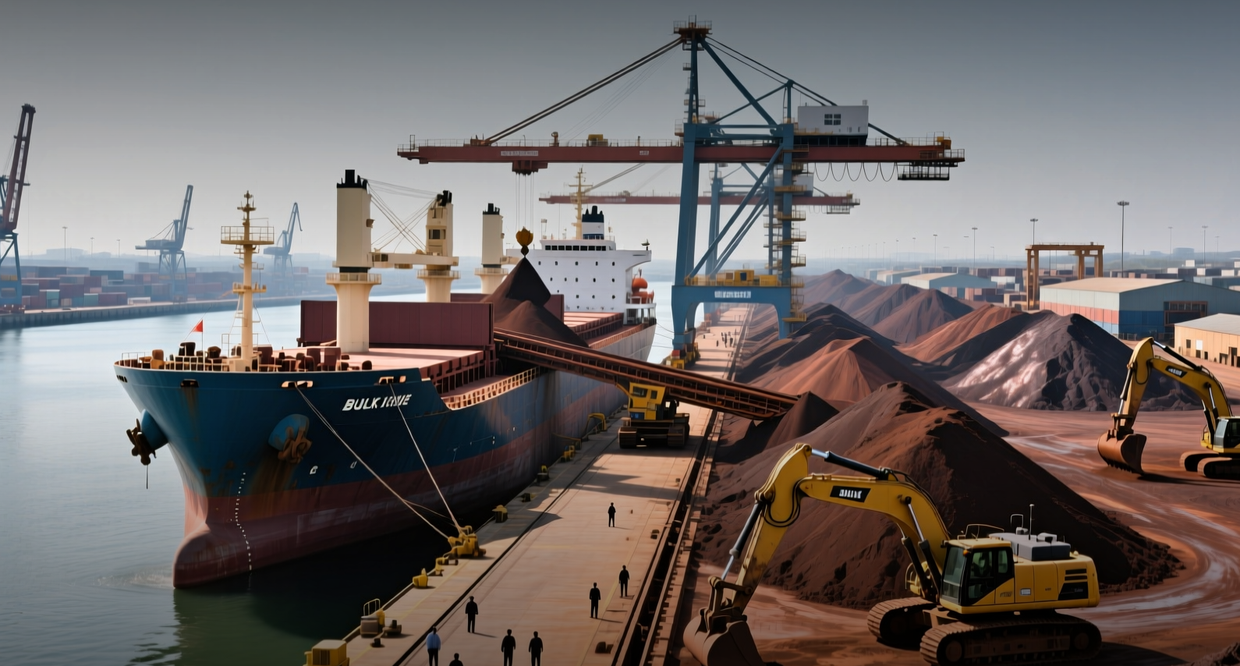
China is the world's largest buyer of iron ore, copper, and crude oil, and its continued intake at elevated levels underpins demand expectations for producers in Australia, Brazil, and the Middle East. The data also carries weight for global trade stocks and companies with significant China revenue exposure, which benefit when the country's import engine runs at full capacity.
The sustained double-digit growth marks a notable stretch for Chinese trade data. If this trajectory holds, it would suggest that China's restocking cycle and industrial demand remain firmly intact, supporting prices for key raw materials. However, the miss versus consensus estimates serves as a reminder that the pace of expansion may be moderating, with economists having expected an even stronger reading.
The trade picture is notable for its breadth. While imports extended their acceleration, exports also gained momentum, according to the same customs data. That combination points to an economy where both domestic absorption and external competitiveness are contributing to trade flows, even as policymakers face calls to rebalance the structure of trade.
For commodity markets, the key question is sustainability. China's import growth has now held above 21% for two consecutive months, a pace that, if maintained, would signal that industrial restocking and manufacturing demand remain robust. Iron ore and copper, two bellwethers of Chinese industrial activity, are particularly sensitive to these monthly trade readings because China accounts for roughly half of global seaborne iron ore demand and a substantial share of refined copper consumption.
The data also carries implications for the yuan and broader Asian financial markets. Strong import demand typically reflects healthy underlying economic activity, which supports the onshore currency, while the concurrent export pickup provides an additional buffer to the trade surplus. For investors tracking China-exposed equities, the sustained import momentum reinforces the case that domestic demand is holding up even as the property sector continues to weigh on parts of the economy.
Looking ahead, market participants will watch upcoming monthly trade releases for confirmation that this import trajectory can be sustained. The direction of China's commodity purchases over the next several months will be a key determinant of price trends for industrial materials and for equities tied to commodity exporters across the Asia-Pacific region and beyond.
This article is for informational purposes only and does not constitute investment advice.
