
Key Takeaways: The Federal Reserve enters its September meeting with the clearest policy dilemma in a decade — inflation creeping above 3.6 percent while growth slows to a 1.4 percent annual pace.
Key Takeaways: The Federal Reserve enters its September meeting with the clearest policy dilemma in a decade — inflation creeping above 3.6 percent while growth slows to a 1.4 percent annual pace.
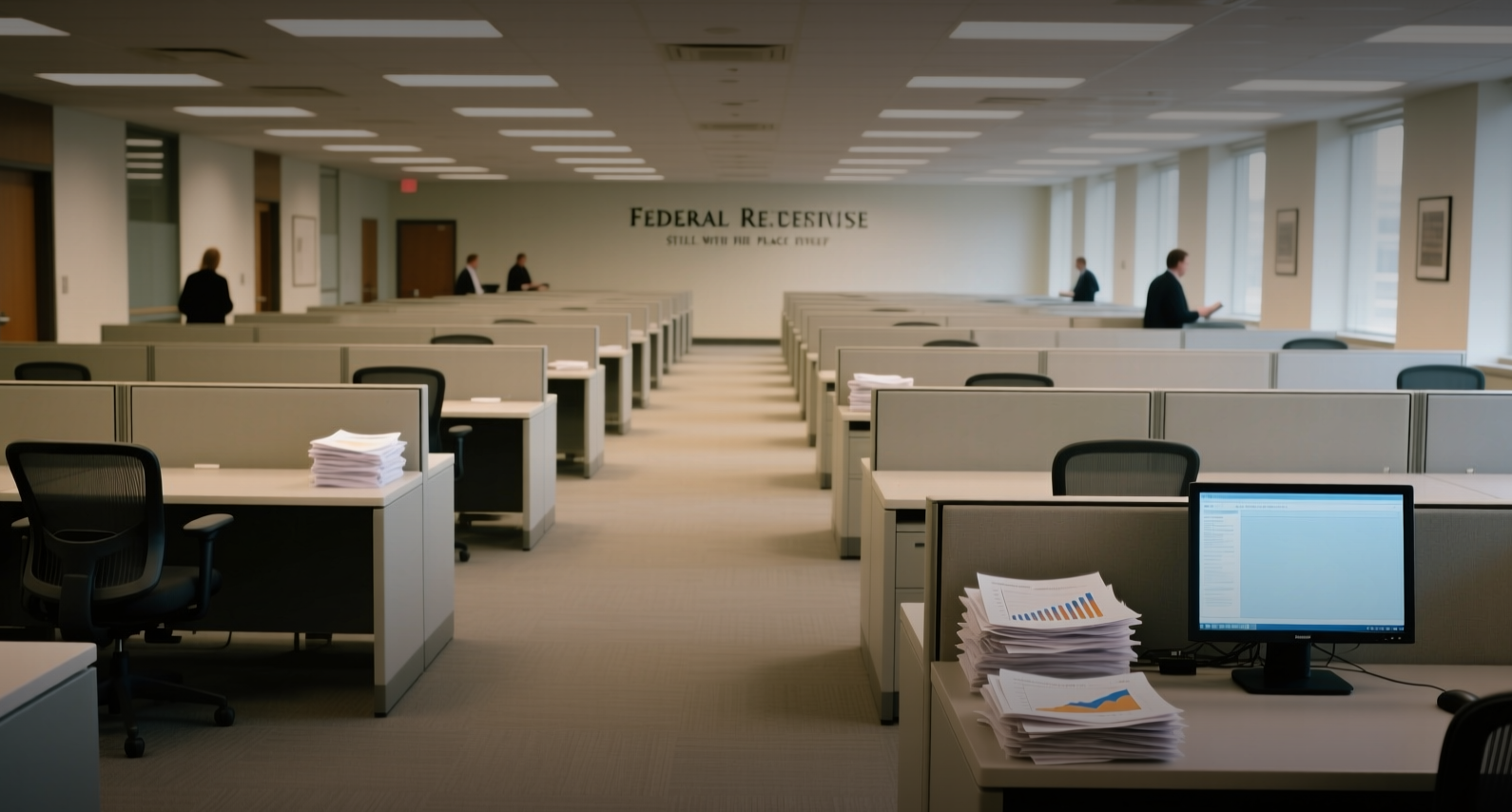
The Federal Reserve enters its September meeting with the clearest policy dilemma in a decade — inflation creeping above 3.6 percent while growth slows to a 1.4 percent annual pace.
The Federal Reserve faces a genuine policy dilemma before its September meeting, with PCE inflation at 3.6 percent against a 2 percent target while growth has slowed to a 1.4 percent annual rate.
"Neither clear case applies. We have, instead, muddy waters," Alan Blinder, professor of economics and public affairs at Princeton and former Federal Reserve vice chairman, wrote in a Wall Street Journal op-ed. "Which option any particular FOMC member prefers depends on how he weighs the various factors."
The fed funds rate stands at 3.50-3.75 percent, leaving the real rate near zero — easy money that worries inflation hawks. Three FOMC members dissented at the July 29 meeting, the widest hawkish split since September 2016. Payroll gains have fallen to 316,000 net new jobs over the past 12 months from 794,000 the prior year, while unemployment holds at 4.1 percent, just below the Fed's 4.2 percent estimate of full employment.
The decision carries direct consequences for markets. CME FedWatch data shows roughly a 31.6 percent probability of a September hike, with the 30-year Treasury yield near 5.27 percent — a level not seen since 2007. The July PCE report, due Wednesday, and Nvidia's earnings the same day will provide the last major data before the FOMC's communications blackout.
The FOMC's July vote split 9-3, with Cleveland Fed President Beth Hammack, Minneapolis Fed President Neel Kashkari, and Dallas Fed President Lorie Logan each dissenting for an immediate 25-basis-point hike. That was the widest hawkish dissent since September 2016, and it reflects a committee where the intellectual case for tightening has gained ground even as the data point in both directions. Chair Kevin Warsh privately told the Financial Times in early August that he is prepared to vote for a hike if incoming data warrant it, while Governor Lisa Cook has stated publicly she is ready to raise rates "if necessary."
Blinder, who served on the FOMC from 1994 to 1996, drew a contrast with the mid-1990s "perfect soft landing," when the committee raised rates 300 basis points in measured steps and achieved near-unanimity because "the calls were relatively easy." Today's calls are not easy, he argued. The case for raising would be clear if inflation were creeping up, growth were steaming ahead, and unemployment were below its natural rate. The case for holding would be clear if inflation were declining, growth were slowing, and the real fed funds rate were near neutral. Neither condition holds.
The July PCE report, due Wednesday at 8:30 a.m. ET, will be the first major inflation reading since June's brief reprieve, when headline PCE fell 0.1 percent month-over-month on energy price relief tied to a temporary Iran ceasefire. Economists surveyed by Dow Jones Newswires expect July headline PCE at 3.6 percent year-over-year, down from 3.7 percent in June, with core PCE holding at 3.3 percent. The month-over-month core reading — consensus at 0.2 percent — is the single number that will define the September decision. Anything at 0.3 percent or above would push hike odds meaningfully higher; anything at 0.1 percent or below would remove September from the active debate.
The same day, Nvidia reports fiscal second-quarter results with consensus revenue near $92 billion. A hot PCE print followed by soft Nvidia guidance would compound rate-hike expectations with weakening AI infrastructure sentiment, with no intervening data before the FOMC's blackout period begins. Conversely, a benign core reading at 0.1-0.2 percent alongside a Nvidia beat could produce a relief rally across both rate-sensitive assets and tech equities.
Chair Kevin Warsh, who has signaled openness to a hike if data warrant it, will deliver his first Jackson Hole keynote Friday. His well-documented aversion to forward guidance means markets are unlikely to get explicit September signals from the speech. Blinder warned that such reticence will cause "unnecessary volatility in the fixed-income markets."
The last time the Fed faced a comparable hawkish-dove split was September 2016, when three members dissented for a hike before the committee ultimately moved in December of that year. The 30-year Treasury yield has already repriced higher-for-longer, and a quarter-point hike in September would raise the prime rate by the same amount, directly increasing variable-rate borrowing costs for credit card holders and adjustable-rate mortgage borrowers within weeks of the vote. For fixed-rate mortgages, the transmission runs through the 10-year Treasury yield, which responds to the cumulative rate path embedded in longer-dated bond markets.
This article is for informational purposes only and does not constitute investment advice.
