
German industrial output fell 1.1% in July, the steepest drop in nearly a year, as auto production contracted 9.2% and Volkswagen moved to cut 100,000 jobs.
German industrial output fell 1.1% in July, the steepest drop in nearly a year, as auto production contracted 9.2% and Volkswagen moved to cut 100,000 jobs.
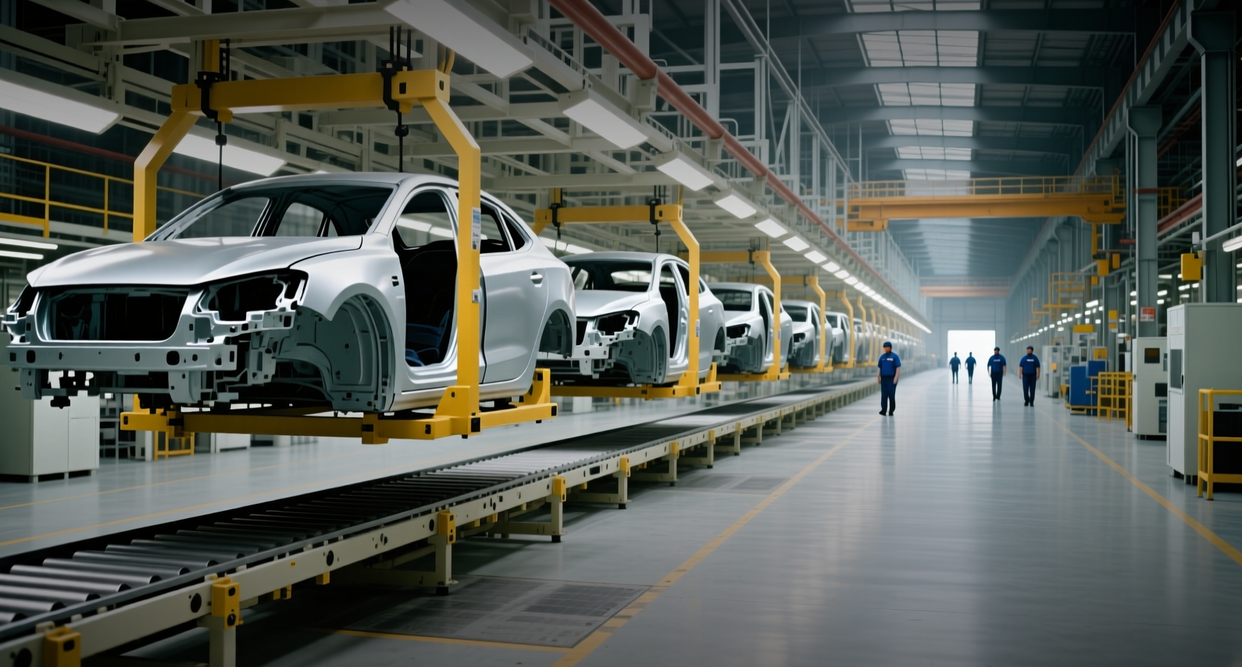
German industrial production fell 1.1% in July, the steepest monthly decline in nearly a year, as a 9.2% contraction in auto output from EV plant retooling exposed the sector's deepening structural crisis.
The German Automotive Association VDA attributed the auto-sector drop to a multi-week production shutdown at car plants, the federal statistics office Destatis said Monday. The decline marked the strongest since August of last year, versus the 0.1% rise economists polled by Reuters and The Wall Street Journal had expected. Capital goods production fell 3.4% and consumer goods dropped 2.2% on the month, while energy output rose 4.7% on stronger wind and solar generation. Excluding energy and construction, industrial production fell 2.2%. On a calendar-adjusted basis, output was 1.6% lower than in July 2025, and June's reading was revised to flat from an initial 0.2% gain.
The auto-led contraction carries outsized weight for Europe's largest economy, where the sector accounts for roughly a fifth of industrial value added. Volkswagen's supervisory board last week unanimously approved doubling planned job cuts to 100,000 — about 15 percent of its 657,000 global workforce — as it confronts stiff Chinese competition and U.S. tariffs. Reuters called the restructuring the most extensive in Volkswagen's 89-year history. The group's second-quarter operating profit fell 9.5% year-on-year to 3.469 billion euros, and it now targets a 9% operating margin by 2030.
Beyond the Auto Sector
The broader industrial picture was softer than the headline suggests, though not uniformly weak. The three-month trend remained positive, with production 0.4% higher in May through July than in the prior quarter, and factory orders have risen for three straight months, including a 2.5% gain in July. August PMI data showed the strongest rise in production since January 2022, suggesting the July print may reflect temporary factors rather than a fresh industrial collapse.
The industrial sector has also largely defied fears that the surge in energy prices since the start of the Iran conflict would hurt activity. Asian rivals were hit harder by the closure of the Strait of Hormuz, and companies stockpiled German goods in anticipation of higher costs and supply disruptions. German fiscal stimulus supporting defense and infrastructure investments has provided an additional offsetting tailwind, helping explain why production in the May-to-July window still ran ahead of the prior three months.
Structural Pressures Mount
Volkswagen's restructuring plan highlights the structural nature of the auto sector's challenges. The group said European production capacity exceeds market demand by more than 500,000 vehicles, with plants in Emden, Zwickau, Hanover and Neckarsulm facing difficulty securing competitive production volumes from 2031 to 2034. The company is reviewing ways to repurpose these facilities while simplifying its governance structure and trimming one-third of its equity and business portfolio. In North America, it will focus on high-margin segments, and in China it will respond to revised growth outlooks while expanding exports to emerging markets in Asia and Latin America.
The July data raises questions about whether the recent improvement in surveys and orders has translated into actual output. If the auto sector's weakness persists into August, it could weigh on euro-area growth expectations and influence European Central Bank policy deliberations, particularly as the ECB weighs elevated inflation against signs of industrial softness. The last time German industrial production contracted this sharply was August of last year, when output fell 1.1% before rebounding over subsequent months. The next German industrial production release for August is scheduled for early October.
This article is for informational purposes only and does not constitute investment advice.
