
OpenAI is shifting from individual productivity to household adoption, hiring a dedicated product manager for families as ChatGPT's user base ages.
OpenAI is shifting from individual productivity to household adoption, hiring a dedicated product manager for families as ChatGPT's user base ages.
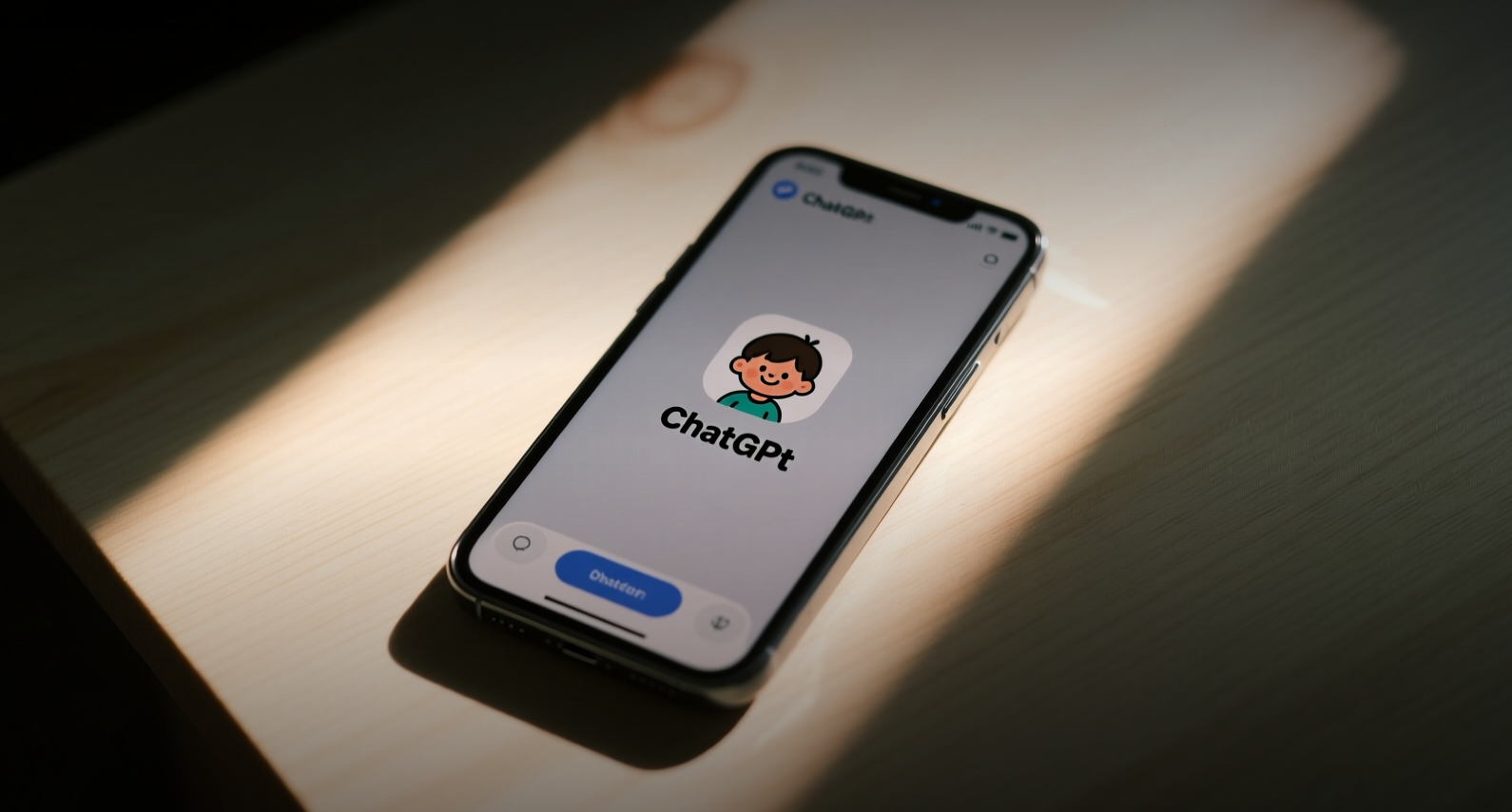
OpenAI is shifting from individual productivity to household adoption, hiring a dedicated product manager for families as ChatGPT's user base ages.
OpenAI is expanding beyond individual users to families, hiring a dedicated product manager for households as ChatGPT's user base ages and parental adoption surges 50% year-over-year.
"This is similar to the path Google, Apple, and Meta eventually followed as their platforms became embedded in everyday life, but AI raises the stakes because the assistant is not just mediating content or devices," Ben Bajarin, chief executive of Creative Strategies, said.
The share of ChatGPT users aged 35 and older globally rose to 31% in the second quarter from 26% a year earlier, while the share of users aged 18 to 24 fell to 29% from 34%, according to Sensor Tower estimates. In the US, nearly one in four smartphone users who are parents used ChatGPT during the quarter, up from 16% a year earlier.
The shift opens a new addressable market for OpenAI as it prepares for a potential initial public offering, but also introduces trust and safety challenges that have already drawn lawsuits from parents alleging ChatGPT contributed to harm suffered by their children.
The hiring comes as OpenAI broadens its product strategy beyond the individual productivity tools that defined its first three years. The company is seeking a product manager in San Francisco to build experiences for families, caregivers and older adults across its products, according to a job posting reviewed by TechCrunch.
The demographic shift is not unique to ChatGPT, though OpenAI's audience is changing in distinct ways. Sensor Tower data shows that users aged 25 to 34 account for 40% of the global app audiences for Anthropic's Claude and Google's Gemini, matching ChatGPT, compared with 33% for Microsoft's Copilot. Copilot skews older, with 20% of its users aged 45 and above, compared with 14% for Claude, 12% for Gemini and 11% for ChatGPT.
Among US smartphone users who are parents, Gemini had the widest reach at 32% in the second quarter, followed by ChatGPT at 24%, Claude at 4% and Copilot at 2%.
Safety and Trust Challenges
Stephen Balkam, chief executive of the Family Online Safety Institute, said the hiring reflects both the maturation of OpenAI and a growing recognition that AI products used by children require different safeguards than those designed for adults. "I see this as safety by redesign," Balkam said. "You take the initial product or service that was released... not really with kids in mind... so this is a much-needed reaction and response."
New research published this week by the Family Online Safety Institute found that parents are underestimating how often their children use generative AI. While 27% of US parents said their child had used generative AI in the past week, 38% of children reported doing so themselves, according to a survey of more than 4,000 families in the US and Australia.
OpenAI has faced multiple lawsuits from parents alleging that ChatGPT contributed to harm suffered by their children, including in cases involving suicide. In response, the company introduced parental controls for teen accounts, routing sensitive conversations to reasoning models designed to better handle signs of distress, and an optional "Trusted Contact" feature that can alert a family member or caregiver in cases of potential self-harm.
Investment Implications
For investors, OpenAI's family push signals a broader total addressable market expansion as the company eyes a potential IPO. The strategy mirrors how social media platforms evolved from individual to household adoption, but with higher stakes given AI's direct interaction with children. Bajarin said he expects companies to roll out family plans, child and teen profiles, caregiver tools, shared household memory, AI tutoring and stronger safety controls as AI becomes a technology shared across generations.
The move also pressures competitors — Google's Gemini, Anthropic's Claude and Microsoft's Copilot — to respond with similar family-oriented strategies or risk losing share in the fastest-growing demographic segment. OpenAI's recent launch of the GPT-5.6 model family, comprising Sol, Terra and Luna, positions it with enhanced efficiency and cost-effectiveness for enterprise and consumer use cases alike.
This article is for informational purposes only and does not constitute investment advice.
