
Stryker's SportSuite Vision is the first surgical application cleared by the FDA for intraoperative use on Apple Vision Pro, giving the device maker a head start in spatial computing for the operating room.
Stryker's SportSuite Vision is the first surgical application cleared by the FDA for intraoperative use on Apple Vision Pro, giving the device maker a head start in spatial computing for the operating room.
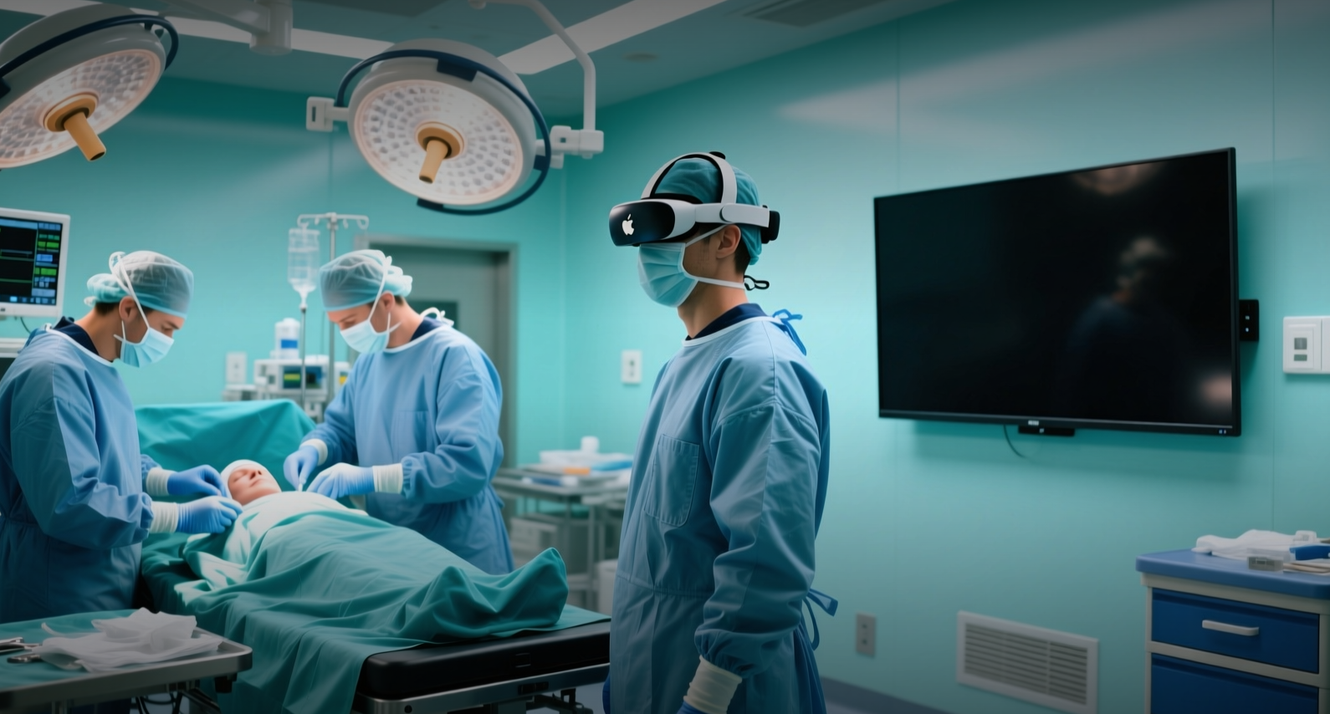
Stryker's SportSuite Vision is the first surgical application cleared by the FDA for intraoperative use on Apple Vision Pro, giving the device maker a head start in spatial computing for the operating room.
Stryker won FDA De Novo authorization for SportSuite Vision, the first surgical application cleared for intraoperative use on Apple Vision Pro, replacing multiple OR monitors with a headset view of arthroscopic video and CT imaging.
"SportSuite Vision marks a new chapter in digital surgery, giving surgeons a more intuitive and ergonomic way to access critical information when and where they need it," Matt Moreau, vice president and general manager of Stryker's Sports Medicine business, said.
The software, cleared July 17, displays arthroscopic video, HipCheck, HipMap and CT imaging in a customizable spatial environment during femoroacetabular impingement and labral repair hip arthroscopy. Stryker completed the first procedure using the device at Duke Health, where orthopedic surgeon Chad Mather III performed the case. Mather, a Stryker consultant, said the setup let him place key clinical information within the sterile field.
The De Novo pathway — reserved for new device types with no predicate — gives Stryker a regulatory moat in spatial-computing surgery, a field Apple is pushing into healthcare with Vision Pro. Stryker, which says it reaches more than 150 million patients a year, is betting the headset workflow extends beyond hips into other surgical specialties.
The technology works through a video see-through augmented reality headset, meaning the surgeon sees the physical operating room with digital images overlaid. Rather than turning to a wall-mounted screen, the surgeon can position arthroscopic video, HipCheck and HipMap analysis, and CT imaging wherever they fit the workflow — all within the sterile field. Stryker frames the software as a step toward a connected digital operating room, where data flows to the surgeon instead of the surgeon moving to the data.
The clinical validation came quickly. Duke Health, a leading academic medical center, hosted the first hip arthroscopy using the device, giving Stryker a named reference site to court other hospitals. The indication covers femoroacetabular impingement and labral repair — two of the most common hip arthroscopy procedures — which gives the company a defined beachhead before it expands the software to other joints.
The competitive stakes are real. Stryker's Sports Medicine unit competes with Arthrex, Smith+Nephew and Zimmer Biomet in arthroscopy, where visualization hardware and software are a growing differentiator. A headset-based workflow that removes monitors from the sterile field could shift purchasing decisions, particularly at academic centers that already run Stryker's Mako robotics platform.
For investors, the question is adoption pace. Stryker has not disclosed pricing or a procedure-volume target for SportSuite Vision, and the headset itself — Apple Vision Pro, which starts at $3,499 — adds a hardware cost that hospitals must weigh. The De Novo clearance removes the regulatory hurdle, but reimbursement and surgeon training remain open questions. Stryker shares trade on the New York Stock Exchange under the ticker SYK.
This article is for informational purposes only and does not constitute investment advice.
