
Key Takeaways:
- Musk called Optimus the hardest product Tesla has ever tried to scale
- Tesla removed volume production language from its Q2 shareholder letter
- More than 1,000 Gen 3 units collect data but zero do useful work
Key Takeaways:
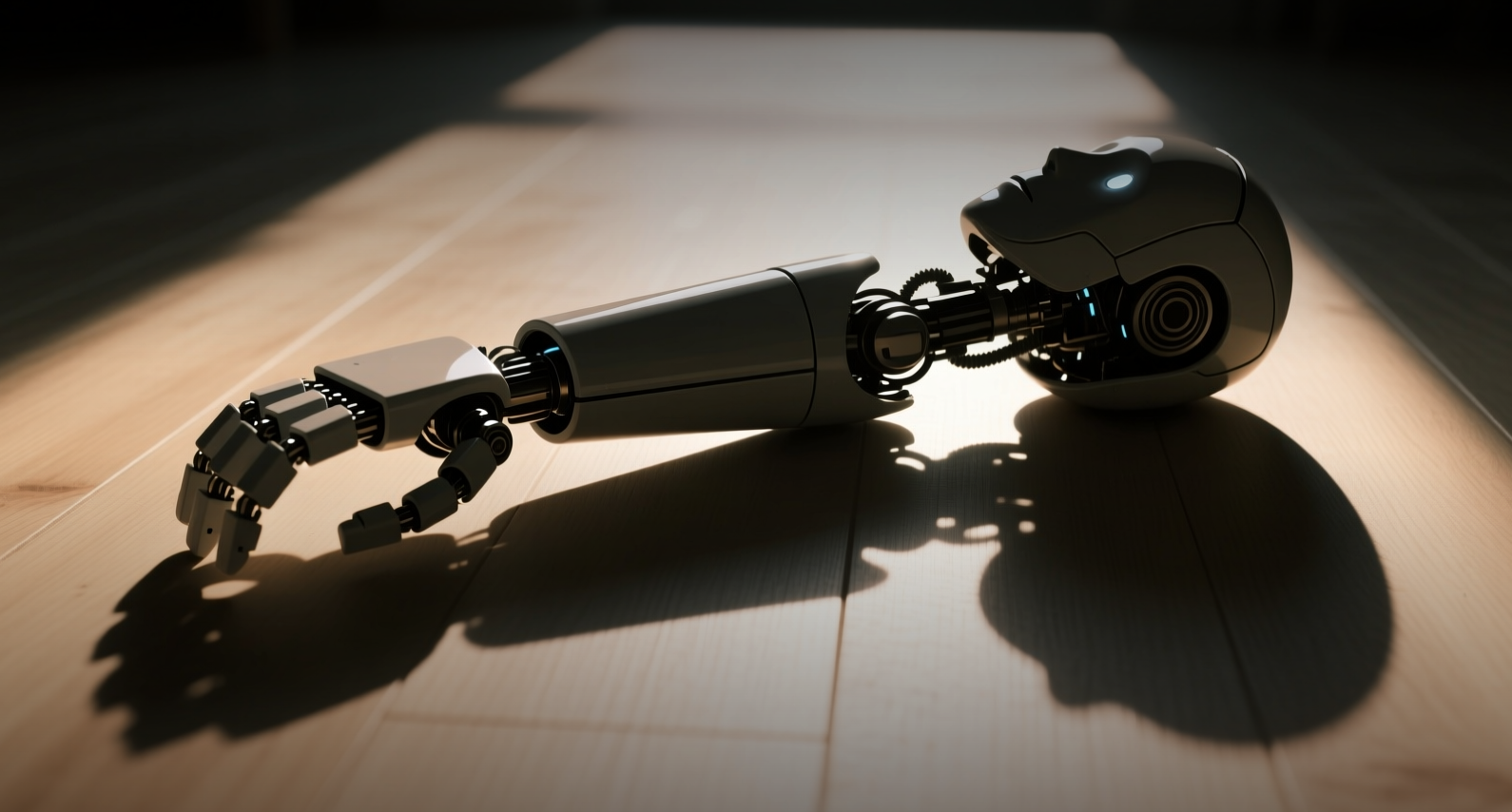
Elon Musk warned investors that Optimus will be the hardest product Tesla has ever scaled, with no existing supply chain and 10,000 unique parts.
Tesla's Optimus humanoid robot faces three critical barriers — intelligence, dexterity and mass production — as the company prepares to begin manufacturing at its Fremont factory, Elon Musk told investors on the company's second-quarter earnings call.
"This is going to be the hardest product to scale manufacturing that we've ever made at Tesla, because everything on the robot is new," Musk said, adding that he wanted to "calibrate people correctly" on expectations.
Tesla quietly removed language about Optimus reaching "volume production" from its Q2 shareholder letter, after using that phrasing as recently as the first quarter. The robot contains roughly 10,000 unique parts, and unlike Chinese competitors that can tap existing smartphone supply chains for actuators and precision motors, Tesla is building its manufacturing base from scratch, Musk said.
The admission carries financial stakes. Tesla's Q2 adjusted earnings of 33 cents a share missed the 51-cent consensus, operating income fell 57%, and capital expenditure jumped to nearly $6 billion as part of a $25 billion full-year spending plan. Free cash flow turned negative $1 billion, and shares fell about 7% in pre-market trading.
A Robot With No Supply Chain
More than 1,000 Gen 3 Optimus units deployed across Tesla's Fremont and Gigafactory Texas facilities are collecting training data rather than performing productive tasks, Musk said. Zero robots are doing useful work in Tesla's factories today. The robot needs at least human-level dexterity before it can operate outside controlled factory settings, a challenge Musk called "incredible" — no robotics company has managed to replicate the human hand.
Tesla has converted its Fremont Model S and Model X production lines for Optimus manufacturing and is building a dedicated facility near Gigafactory Texas. The company's China president has described the Shanghai Gigafactory as a "golden key" to mass-producing Optimus, though that factory has not yet begun robotics manufacturing. Competitors including Boston Dynamics and Figure AI are also racing to commercialize humanoid robots, though neither has disclosed production volumes comparable to Tesla's ambitions.
From 100,000 Units to Zero
The tone shift from previous quarters is stark. Last year Musk said he would be "shocked" if Tesla was not producing 100,000 Optimus robots per month within five years. In January 2025, he projected 50,000 to 100,000 units for 2026. By January of this year, he acknowledged zero robots were doing useful work.
Musk's compensation deal ties part of his payout to delivering 1 million Optimus robots within a decade, a target that now sits uncomfortably against his own warnings about scaling difficulty. Tesla must also solve memory, logic and chip packaging challenges while securing AI processors from partners including Samsung and TSMC.
Tesla shares, which have swung between optimism over AI revenue and concern about automotive margins, now face a period where the company is spending heavily on next-generation products while core automotive revenue — $20.5 billion in Q2, up from $16.6 billion a year earlier — must fund the transition. The company delivered more than 480,000 vehicles in the second quarter, its best result since the third quarter of last year, but the capital required to bring Optimus to volume production remains an open question with no clear timeline.
This article is for informational purposes only and does not constitute investment advice.
