
The Trump administration's new drone tariffs mark a shift toward targeted duties, stricter rules of origin, and tougher enforcement in its trade strategy.
The Trump administration's new drone tariffs mark a shift toward targeted duties, stricter rules of origin, and tougher enforcement in its trade strategy.
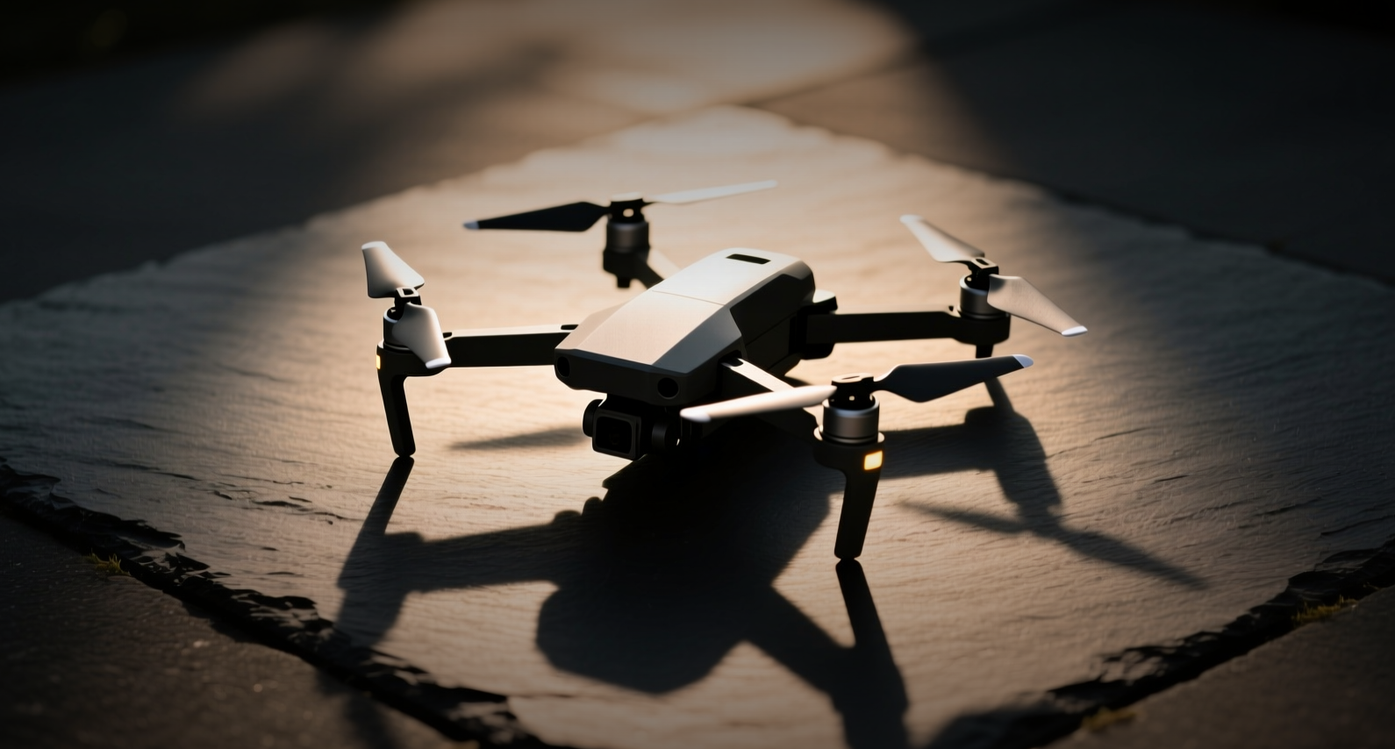
President Donald Trump signed a proclamation Thursday imposing tariffs of up to 100 percent on imported drones and components, targeting larger and thermal-imaging systems while granting key allies preferential rates of 10 to 15 percent.
"The United States is too reliant on foreign sources of UAS and UAS components," Trump said in the proclamation, citing a probe by Commerce Secretary Howard Lutnick that found foreign-built drones "pose security and safety risks."
The 100 percent ad valorem duty applies to unmanned aircraft weighing more than 25 kilograms, drones with thermal-imaging capability, and certain critical components and docking stations. A 25 percent tariff covers smaller drones. Imports from the European Union, Japan, Liechtenstein, South Korea, Switzerland and Taiwan face 15 percent, while British drones draw 10 percent. The tiered structure reflects drone size, operational capability and country of origin, with the highest duties reserved for hardware with military, surveillance or intelligence applications.
The duties take effect at 12:01 a.m. Eastern Time on Sept. 3, 2026, with less-sensitive components delayed until Feb. 9, 2027. Issued under Section 232 of the Trade Expansion Act of 1962, the measure aims to curb reliance on Chinese suppliers that dominate the commercial-drone market.
The preferential rates are conditional. To qualify, substantially all hardware, software and technology in the drone must originate in the partner country or the United States — a requirement designed to stop Chinese components from entering the U.S. market through assembly or re-export in allied nations. Modern drones rely on globally sourced semiconductors, sensors, cameras, batteries, radio-frequency systems and flight-control software, so manufacturers seeking the lower duties must document detailed supply-chain compliance.
Chinese firms have long led the commercial-drone market in consumer models, aerial imaging, industrial inspection and low-cost unmanned systems. U.S. officials argue foreign-built drones carry risks tied to data collection, surveillance, software access and supply-chain disruption. The policy is framed as both industrial strategy and national security, creating incentives for domestic production of batteries, sensors, navigation systems, secure communications and autonomous-flight software.
The escalation follows Trump's late-July announcement of tariffs affecting 99 percent of U.S. imports. After the previous rounds, bilateral trade with China contracted sharply, and the drone duties extend that pressure to a sector where the United States imports most of its hardware. The last major tariff escalation on electronics preceded a pullback in affected supply-chain stocks, a pattern investors may watch again as the Sept. 3 date nears.
The tariffs could benefit domestic drone producers by reducing price competition from imports, but they may raise equipment costs for U.S. businesses using drones in agriculture, construction, energy, logistics, public safety, mapping and infrastructure inspection. For defense companies, the measure could accelerate a more secure domestic supply base. Pentagon-approved products exempted from the Federal Communications Commission's "Covered List" within 20 days of signing will face the delayed Feb. 9, 2027, timeline. The measure also pressures allied manufacturers to prove their supply chains are free of Chinese content, a compliance burden that could raise administrative costs even for firms that avoid the top rate.
The near-term test comes Sept. 3, when the main schedule takes effect. Drone makers and their suppliers face a scramble to rework sourcing ahead of the deadline, while commercial operators weigh higher equipment costs against the delayed component timeline. If allied manufacturers can certify origin compliance quickly, the 15 percent rate may soften the blow; if not, the effective duty for many systems could reach the 100 percent ceiling.
The long-term outcome depends on whether U.S. and allied manufacturers can scale production while keeping prices competitive and securing access to critical components. If domestic output lags, the duties risk raising costs for commercial users without displacing Chinese market share — the same tension that followed earlier tariff rounds on semiconductors and electronics.
This article is for informational purposes only and does not constitute investment advice.
