


Waymo's custom 5nm chip, rated at 1,000 TOPS, is now in production across its newest robotaxi generation.
Waymo's custom 5nm chip, rated at 1,000 TOPS, is now in production across its newest robotaxi generation.
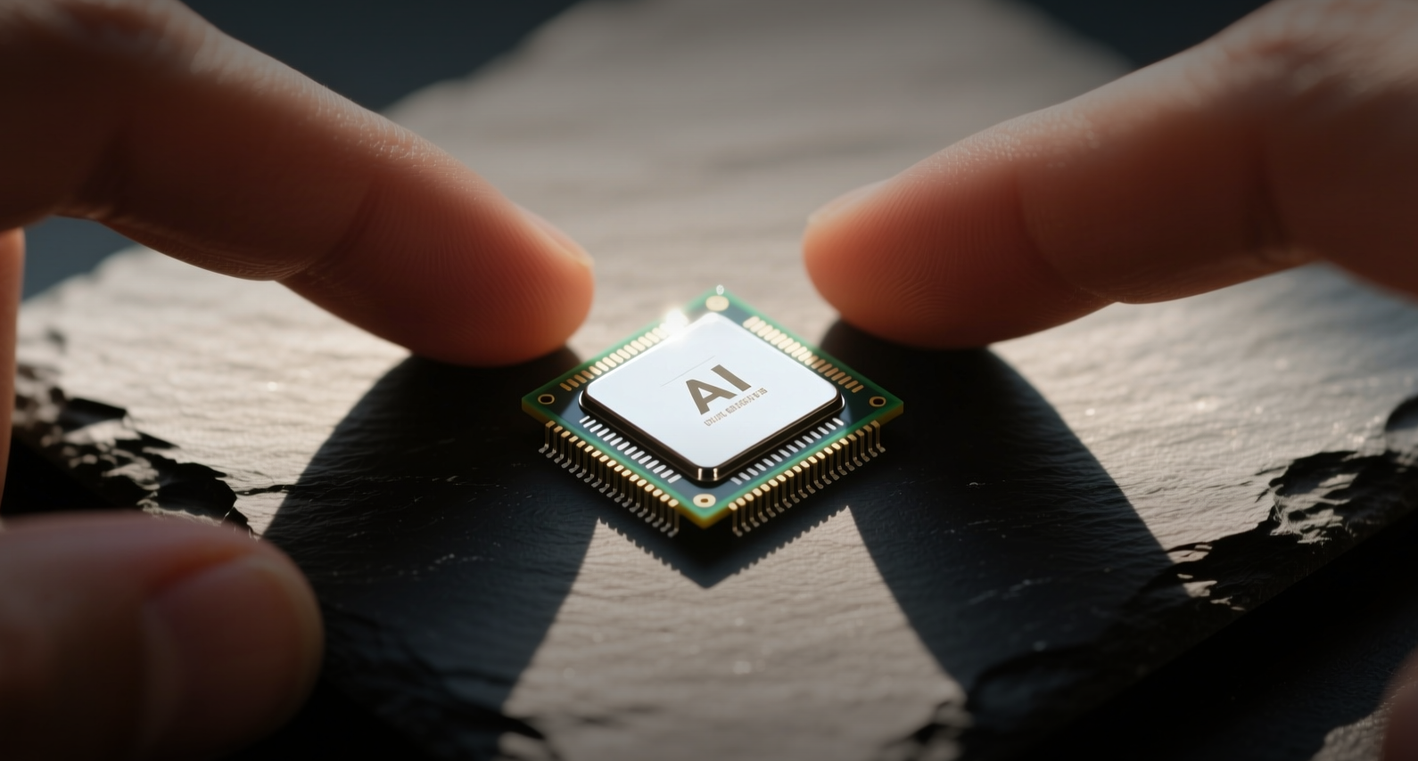
Waymo's in-house 5nm ASIC, rated at 1,000 TOPS, is now in production across its newest robotaxi generation, cutting the Alphabet unit's reliance on Nvidia and AMD for the compute behind roughly 500,000 weekly paid trips.
"Compute systems for autonomous driving handle highly diverse workloads," Satish Jeyachandran, vice president of engineering at Waymo, said in a blog post. "We are designing a system that would be considered impressive for a data center, with the added complexity of an in-vehicle operating domain and real-time requirements."
The application-specific integrated circuit, made on Taiwan Semiconductor Manufacturing Co.'s 5nm node, sits at the front of the sensor stack, cleaning up data from 13 high-resolution cameras and running fast AI checks before information reaches the vehicle's main computer. Waymo said it has scaled its compute capability 20 times over the past eight years, guided by three design principles it calls non-negotiable: responsive, ruggedized and redundant. The stack must react to sensor data with minimal latency, survive road vibration and extreme temperatures, and run two parallel systems in case one fails — all while staying quiet enough not to disturb riders and compact enough to leave room for luggage. Waymo says the front-end processing improves low-light perception, letting the cameras pick out objects at night that conventional image sensors miss.
The chip is part of Alphabet's broader effort to design custom silicon and control the rising cost of AI infrastructure. It also arrives as Waymo pushes toward profitability: the sixth-generation hardware is estimated to cost $20,000 to $25,000 per vehicle, down from $100,000 to $125,000 for the fifth generation, according to Forbes.
The custom chip gives Waymo a direct answer to Tesla Chief Executive Elon Musk, who has dismissed lidar and multi-sensor fusion as a "crutch" and "a fool's errand," arguing that conflicting sensor data creates dangerous ambiguity. Waymo counters that its redundant, heterogeneous system — pairing its ASIC with CPUs, GPUs and accelerators from AMD, Micron, Nvidia, Samsung, SanDisk and Socionext — is what lets it deploy at scale. Rather than build the entire stack in-house, Waymo focuses its engineering on real-time sensor fusion and front-end machine learning while leaning on the global supply chain for the rest.
The 1,000 TOPS rating puts the chip on par with Nvidia's latest autonomous-driving systems, giving Waymo a negotiating lever against its largest silicon supplier. For Nvidia, which counts automotive among its growth segments, losing the design win at Waymo is a modest but symbolic erosion of its dominance in AI compute.
Waymo currently operates about 4,000 vehicles across more than 10 cities and is expanding with the Ojai, a Zeekr-built minivan equipped with the sixth-generation system. MoffettNathanson estimates Waymo is on pace to import 5,000 Ojai vehicles to the United States by the end of 2026, more than double its current Jaguar fleet, though tariffs on Chinese-built vehicles add cost to each unit.
For investors, the chip shows Alphabet's willingness to vertically integrate where latency and cost matter most while keeping supply-chain flexibility. Alphabet shares trade at roughly 22 times forward earnings, with Waymo's expansion priced in as a key growth driver. The open question is whether the hardware savings can offset the tariff drag and carry the robotaxi unit to sustained profitability — and whether rivals such as Amazon's Zoox, which also designs its own hardware, can match the cost curve.
This article is for informational purposes only and does not constitute investment advice.
