
China's trade surplus is set to hit $1.2 trillion this year, and a growing Western bloc wants a Plaza Accord-style push to revalue the yuan by as much as 19%.
China's trade surplus is set to hit $1.2 trillion this year, and a growing Western bloc wants a Plaza Accord-style push to revalue the yuan by as much as 19%.
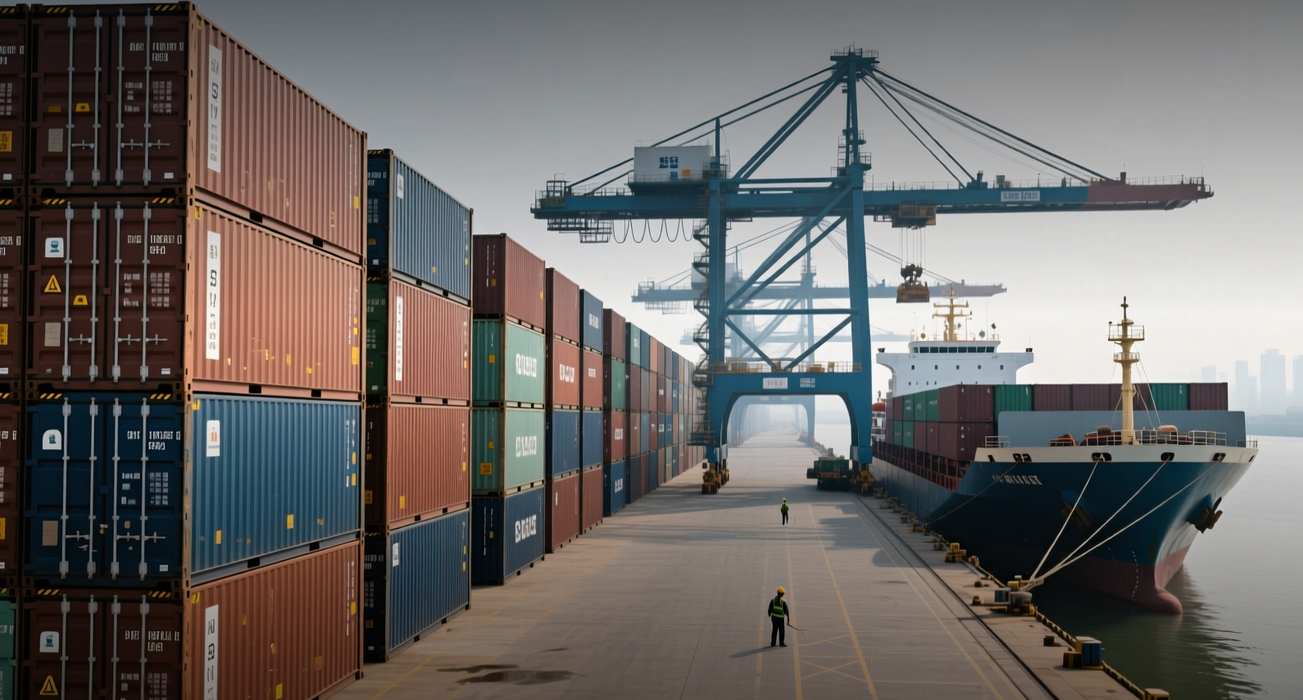
China's trade surplus is on track to hit $1.2 trillion this year, and Western officials increasingly argue the world needs a Plaza Accord-style push to force the yuan up 19%.
"This Chinese surge now threatens the very core of Europe's productive system," a French government report said in February, as German Chancellor Friedrich Merz in June called for a new Plaza Accord aimed at China.
Goldman Sachs projects the surplus on the current account — a trade measure covering goods, services and investment income — will reach 1% of global GDP, a share no country has achieved in postwar history. The bank estimates the yuan is undervalued by 19%; Brad Setser, a scholar at the Council on Foreign Relations, puts the gap at 35%.
The stakes are high enough that G20 finance ministers and central bank governors meeting this weekend in Asheville, N.C., could begin the conversation. A currency accord enforced with tariffs may be the only lever left to force Beijing to shift from exports toward domestic demand.
The debate is over whether the undervalued yuan caused the surplus or merely reflects it. The IMF and most orthodox economists argue the cheap currency is a symptom of inadequate domestic demand rooted in China's structure — an inadequate safety net and a fiscal system that taxes households too heavily. A collapsed property bubble has shriveled investment and widened the surplus further.
The alternative view, advanced by Michael Pettis, a China expert affiliated with the Carnegie Endowment for International Peace, holds that Beijing fixes the currency to boost exports and suppress imports. A cheap yuan shifts income toward export industries and away from consumers, depressing consumption and expanding the surplus.
Goldman economists Kamakshya Trivedi and Hui Shan show goods prices in China have fallen since the pandemic while rising in developed markets, dragging the inflation-adjusted yuan down sharply. The result: China's price discount runs 32% in electric vehicles, 38% in refrigerators and 53% in shoes, gaps that should not persist if the yuan were fairly valued.
Chinese officials pay lip service to boosting consumption while doing little; leader Xi Jinping disparages household support as "welfarism." The undervalued yuan takes pressure off Beijing to reform because it sustains exports while the rest of the economy is moribund, Setser said.
Under the 1985 Plaza Accord, the U.S. and allies intervened jointly to push the dollar down against the yen and mark, and the U.S. trade deficit eventually shrank sharply. But China is no close ally and shows no appetite for cooperation. "China will not accept using exchange rates as a pretext for oppression," the Global Times, a Communist Party mouthpiece, said in June.
Trading partners cannot simply buy yuan to force it higher because Beijing tightly controls access to its currency. Instead they could impose tariffs, with a promise to dial them back if China revalues — a formula that worked in 2005, when China began a significant revaluation under the threat of tariffs in Congress. The U.S. has already cut its deficit with China through steep tariffs, and Europe is warming to the idea; the French report proposed a general tariff of 30% against China or a euro depreciation of 20% to 30%.
Standing in the way is President Trump, who favors tariffs and may not trade them for currency appreciation, and a divided Europe reluctant to antagonize Beijing. Yet if the U.S. and its allies can get past the politics, a currency accord — with or without China's cooperation — could be the cleanest, least distorting and most effective solution.
This article is for informational purposes only and does not constitute investment advice.
