
Key Takeaways:
- AMD's MI455X carries 432GB of HBM4 per chip, a 50 percent jump over its predecessor, as Helios racks begin shipping in September.
Key Takeaways:
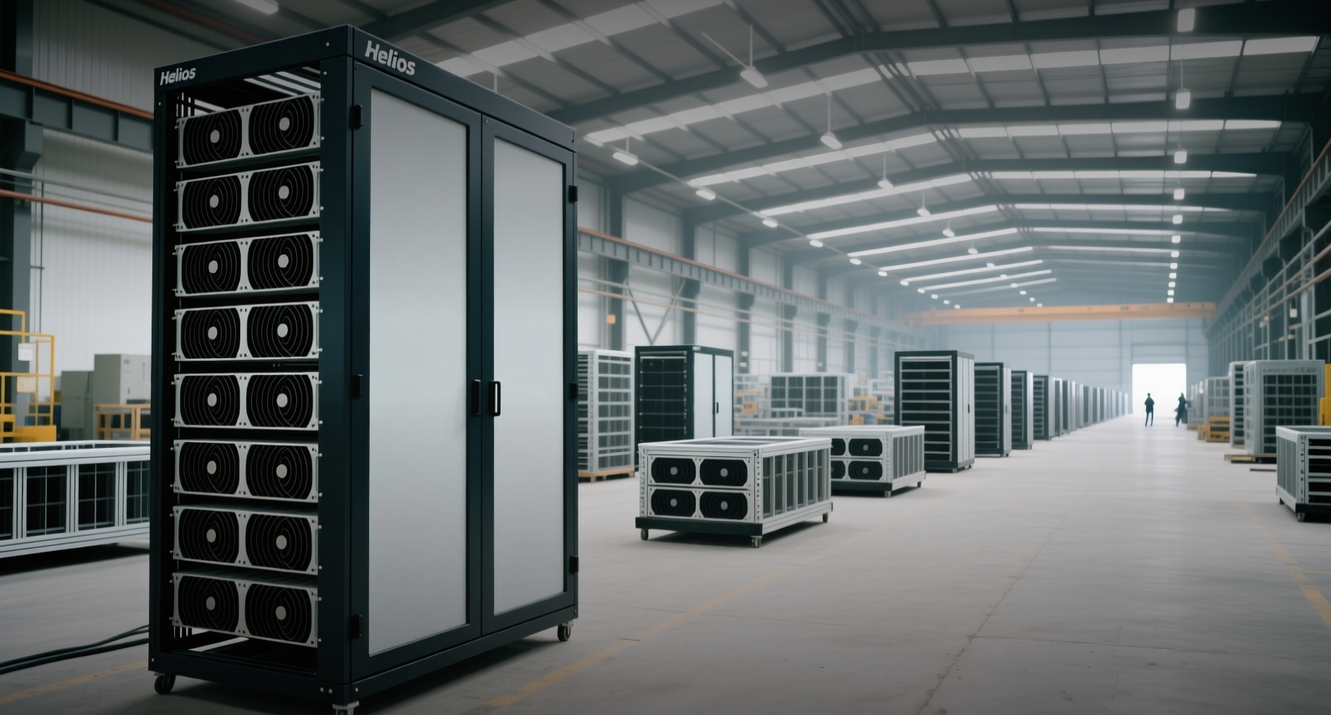
AMD's MI455X carries 432GB of HBM4 per chip, a 50 percent jump over its predecessor, as Helios racks begin shipping in September.
AMD's Instinct MI455X makes memory the battleground in AI accelerators, packing 432GB of HBM4 per chip — 50 percent more than the MI355X it replaces — as Helios racks begin shipping in September.
"Helios is now in production with initial shipments on track to begin later this quarter and ramp through the fourth quarter and into 2027 to meet very strong customer demand," Lisa Su, AMD's chief executive, said on the company's early August earnings call.
The MI455X uses AMD's fifth-generation CDNA architecture with as many as 256 work-group processors running Wave32 execution, moving further from the graphics-oriented Radeon line. Each accelerator delivers 23.3TB/s of memory bandwidth and 3.6TB/s of scale-up bandwidth. A single Helios installation combines 72 MI455X GPUs with 18 sixth-generation EPYC "Venice" CPUs, producing more than 31TB of HBM4 capacity, roughly 1.7PB/s of aggregate memory bandwidth and a claimed 2.9 exaflops of low-precision AI performance. AMD did not disclose the process node. The company markets the rack against Nvidia's Vera Rubin, citing 432GB versus 288GB of memory and a 15 percent edge in peak performance on one AI math format.
The memory bet carries a cost. HBM is the dominant bill-of-materials item in an AI accelerator, and AMD does not manufacture it. SK Hynix, the leading HBM supplier, posted a 76 percent operating margin last quarter as AI-server memory prices climbed, and AMD's flat 56 percent gross margin guidance implies the company expects to pass those costs through. AMD trades near $479, about 31 times expected forward earnings, with Helios revenue set to appear in the fourth quarter reported Nov. 3.
The capacity jump is deliberate. AMD's spec sheet says the added memory lets larger AI models and their working data stay local, next to the processor — the binding constraint on large-model inference. More memory per GPU means fewer GPUs per model instance, cutting both capital cost and interconnect overhead. The whole rack follows the same logic: Helios packs 31TB of HBM4 across its 72 chips, and AMD markets that figure alongside the rack's computing power.
The competitive claim is quantified. AMD says Helios delivers up to 30 percent more tokens per dollar than the leading competitive solution, combining compute, memory capacity and networking in a single co-optimized rack. Tokens per dollar has replaced raw FLOPS in procurement conversations, and a 30 percent improvement is the difference between a positive and negative return on an inference deployment.
The timing is the harder part. AMD is raising memory content by half at a moment when memory prices are climbing across the chip industry. Each MI455X carries 50 percent more memory than the chip it replaces, of a newer type that likely costs more per gigabyte. SK Hynix reported second-quarter revenue up 257 percent year over year with a record 76 percent operating margin, and said high-performance products for AI servers led price increases.
Su's answer on supply came on the same call. "There is very good visibility into HBM allocation for what we expect to deliver in 2027," she said, describing years of work with AMD's memory partners. But allocation is volume, not price — a supply agreement means the memory shows up on schedule, while what it costs remains the open variable.
AMD's data center segment produced $6.7 billion of revenue in the second quarter, up 107 percent year over year and 58 percent of the company total. Companywide revenue reached a record $11.5 billion, up 50 percent, with non-GAAP gross margin at 56 percent. Management guided third-quarter revenue to about $13 billion, up about 41 percent, with adjusted gross margin holding near 56 percent — flat guidance that implies AMD expects to pass higher input costs through or find offsetting efficiencies.
The rack-scale transition changes the calculation. Selling complete systems rather than components typically compresses percentage margin while expanding dollar content per deployment — a 56 percent gross margin on a $2 million rack generates more gross profit than a 70 percent margin on $500,000 of accelerators. Helios ships into commitments involving OpenAI, Meta and Anthropic, with the Anthropic partnership alone contemplating up to 2 gigawatts of MI450 series deployments. The 432GB will sell the racks; whether the margin survives the price of that memory is the test, and the flat guidance says management believes it can pass those costs through. At about 31 times expected earnings, shareholders are paying as if that turns out to be true.
This article is for informational purposes only and does not constitute investment advice.
