
China's three ministries now require cost-based pricing and price-tier transparency for every auto export, a compliance regime brokers are already pricing into XPENG-W and GWMOTOR targets.
China's three ministries now require cost-based pricing and price-tier transparency for every auto export, a compliance regime brokers are already pricing into XPENG-W and GWMOTOR targets.
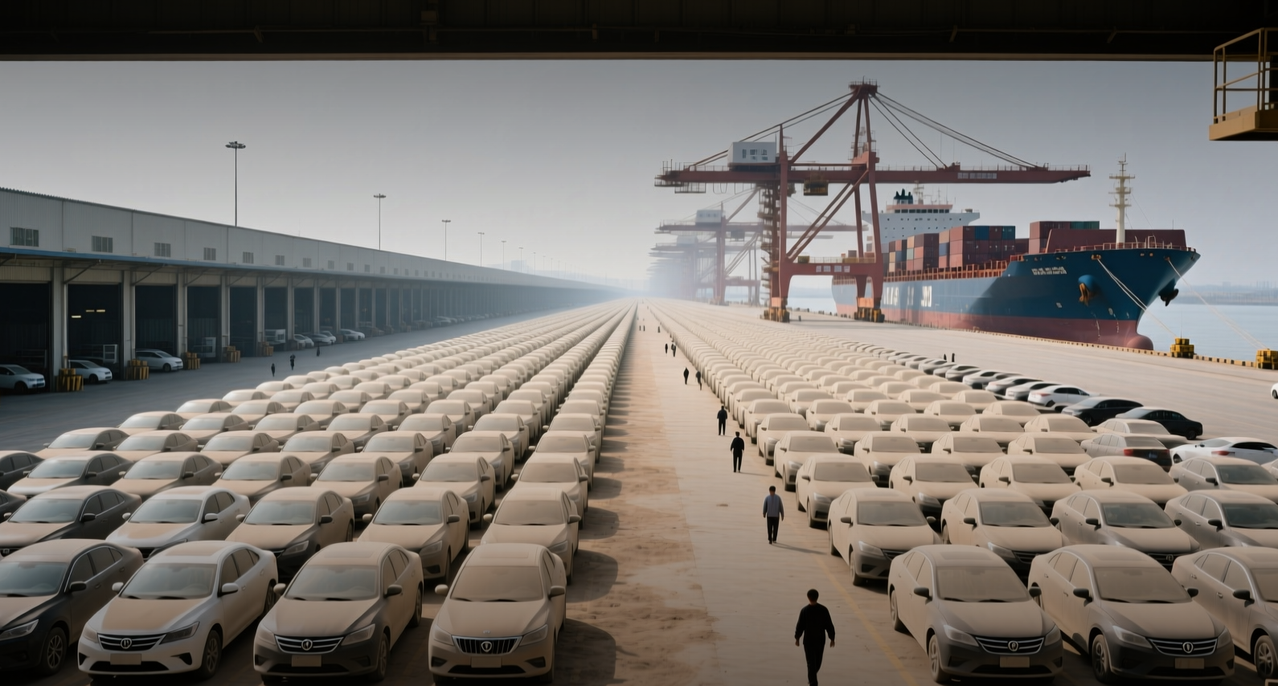
China's three ministries now require cost-based pricing and price-tier transparency for every auto export, a compliance regime brokers are already pricing into XPENG-W and GWMOTOR targets.
China's three ministries on Tuesday issued binding overseas pricing rules for auto exports, a compliance regime brokers are already pricing into XPENG-W and GWMOTOR targets.
"The guidelines are a public service product designed to support automotive enterprises in their overseas expansion, helping them regulate competitive practices and strengthen compliance systems," an official with the Ministry of Commerce said.
China exported 8.32 million vehicles in 2025 to more than 200 countries and regions, and Chinese companies have invested in auto manufacturing in over 80 countries and regions. The rules, issued jointly by the Ministry of Commerce, the Ministry of Industry and Information Technology and the State Administration for Market Regulation, require automakers to set clear price tiers for different vehicle configurations, avoid frequent or sharp price fluctuations, and respect the independent pricing rights of dealers and agents in host markets.
The compliance burden raises operational costs for Chinese automakers expanding abroad, and brokers are already recalibrating earnings expectations. CMSI cut its XPENG-W target to HKD92, while CMBI cut GWMOTOR's to HKD14 while keeping a Buy rating.
The guidelines mark a shift from the aggressive discounting that helped Chinese brands win overseas share. Companies must now base prices on cost and international market supply and demand, display prices transparently, and avoid undisclosed fees. Promotional activities — prize sales, free trials, discounts, gift giveaways and auto-finance incentives — must follow local laws, business practices and cultural customs.
The rules also extend to intellectual property. Automakers must strengthen overseas deployment and protection of IP related to industrial design, parts manufacturing and communication technologies, and prevent infringement risks. They must assess product-market fit before exporting, avoiding products that do not meet the needs of target markets and usage environments. Data processing tied to connected vehicles and autonomous driving — collection, use, protection and cross-border transfers — must comply with applicable laws.
The market reaction has been swift. CMSI cut its XPENG-W price target to HKD92, and CMBI cut GWMOTOR's to HKD14 while maintaining a Buy rating, reflecting lower earnings expectations under the new regime. The cuts suggest investors expect the compliance burden to weigh on near-term overseas sales volumes and margins, even as the rules protect brand value over the long run.
The last time Beijing imposed comparable pricing discipline on an export sector was in steel and aluminum, where compliance requirements preceded a slowdown in overseas shipments. For automakers, the trade-off is sharper: China's 8.32 million vehicle exports in 2025 made autos a pillar of outbound trade, and the new rules aim to reduce friction with host countries that have questioned Chinese pricing practices.
The guidelines take effect as Chinese automakers deepen their global footprint, with production investments across more than 80 countries and regions. Companies that adapt compliance structures quickly stand to protect margins and brand value, while those that relied on price competition face the steepest adjustment. The full earnings impact will show in the next quarterly results, as brokers' target cuts suggest the market has already begun pricing it in.
This article is for informational purposes only and does not constitute investment advice.
