
August shipments climbed 25 percent year-on-year, 3.1 points above the consensus forecast, powered by AI chip price inflation and US consumer restocking that offset typhoon disruption and weaker EU and ASEAN demand.
August shipments climbed 25 percent year-on-year, 3.1 points above the consensus forecast, powered by AI chip price inflation and US consumer restocking that offset typhoon disruption and weaker EU and ASEAN demand.
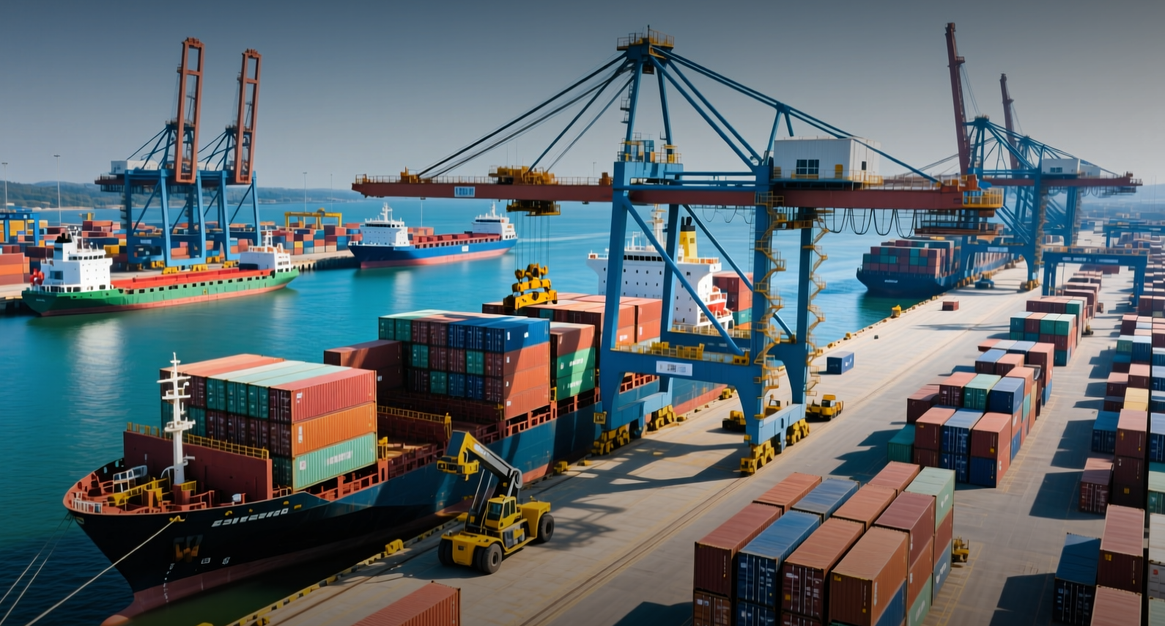
China's exports climbed 25 percent in August, beating the 21.9 percent consensus, as AI chip price gains and a US restocking cycle outweighed typhoon disruption and softer European and Southeast Asian demand.
"The AI boom lifted profits of advanced manufacturers, while industries relying on the domestic market have grappled with producer price inflation and soft demand," said Zhaopeng Xing, senior China strategist at ANZ.
The trade surplus widened to $119.09 billion from $112.5 billion in July, customs data showed Sept. 8. Exports to the US jumped 17.4 percentage points to 34.6 percent growth, while integrated circuit shipments rose 129.8 percent year-on-year with an estimated price index of 149.6 percent, up 36.8 points from July.
The beat shows Beijing's reliance on external demand to reach its 4.5-5 percent growth target after the economy expanded 4.3 percent in the second quarter. Yet the widening surplus — $805.51 billion over the first eight months, on track to top $1 trillion for a second straight year — keeps China exposed to US and European demands to narrow trade imbalances.
Price, rather than volume, is doing the heavy lifting in the headline number. Integrated circuits and automatic data-processing equipment, the two AI-linked categories, lifted their export growth 13.3 and 9.1 percentage points to 129.8 percent and 76.5 percent respectively. A simple value-per-unit estimate puts the integrated circuit price index at 149.6 percent, up 36.8 points from July, even as typhoons cut port cargo throughput 7.4 percentage points below July's pace. Underlying production growth, stripped of prices, held near minus 0.8 percent, while processing-trade imports — a one-month leading indicator — stayed elevated at 36.5 percent growth in July.
Consumer goods exports extended their recovery, with toys up 17.0 points to 15.3 percent, footwear up 8.7 points to 11.4 percent and home appliances up 4.1 points to 10.8 percent. Tariffs had earlier pushed US consumer imports below consumption, leaving inventories unusually low; restocking demand is now supporting shipments even without stronger US spending. China's "supply substitution" advantage, where domestic production outpaces overseas rivals, adds support. The 17.4-point jump in exports to the US points to that deferred import cycle, which by inventory-cycle logic could run for more than half a year.
The offsetting weakness sits in non-AI capital goods and the EU and ASEAN markets. Ship exports fell 71.3 points to 21.0 percent, general machinery dropped 16.2 points to 15.2 percent and unwrought aluminum eased 6.3 points to 38.5 percent. These track production trends in ASEAN and the EU, where persistently high oil prices are biting: Vietnam's production index slipped 1.1 points to 19.0 percent in August, while EU output growth of 1.0 percent trails the 1.9 percent pace at the end of last year. Exports to the EU and ASEAN fell 9.4 and 8.2 points to 6.8 percent and 30.4 percent respectively.
Imports also stayed strong, up 28.2 percent, again reflecting AI price effects: automatic data-processing equipment imports surged 209.1 percent and integrated circuits 83.6 percent. Bulk commodities softened, with crude oil imports down 8.9 percent and iron ore growth easing to 6.2 percent.
Looking ahead, the AI price surge and consumer restocking should keep exports resilient into September and beyond, even as the EU-ASEAN drag and high oil prices temper non-AI shipments. For Beijing, the strength relieves pressure for immediate stimulus — the government has deployed an 800 billion yuan financing tool for infrastructure — but leaves the widening surplus, and the friction it invites, as the main risk. Washington and Beijing are exploring reciprocal tariff cuts on $30 billion of goods ahead of a summit later this month, a truce that has held since late last year despite on-and-off frictions.
This article is for informational purposes only and does not constitute investment advice.
