
China's August trade surplus expanded to 809.3 billion yuan as exports surged 25 percent, potentially supporting RMB strength ahead of Xi's Washington visit.
China's August trade surplus expanded to 809.3 billion yuan as exports surged 25 percent, potentially supporting RMB strength ahead of Xi's Washington visit.
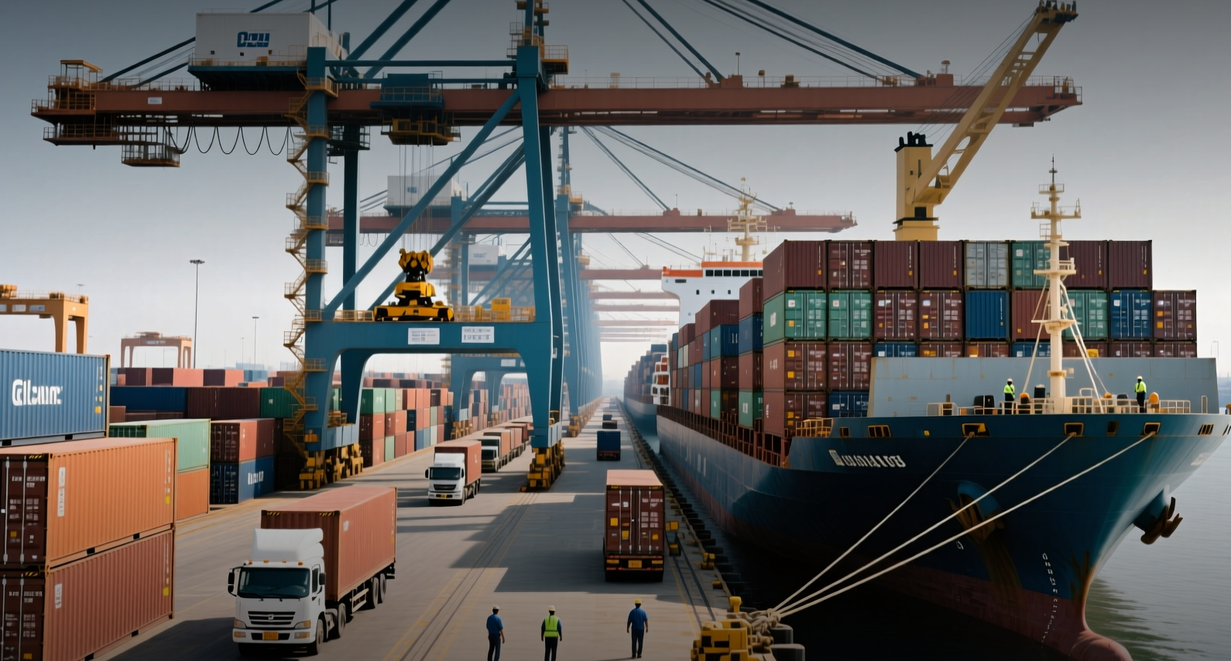
China's trade surplus widened to 809.3 billion yuan in August from 767.07 billion yuan, as dollar-denominated exports climbed 25 percent year-over-year — the tenth consecutive month of growth — even as imports missed analyst forecasts.
"The sense of urgency and determination in Beijing's recent policy communications, combined with stabilizing manufacturing activity in August, could help drive a recovery in growth momentum in the second half," said Neo Wang, China strategist at Evercore ISI.
August exports totaled $401.4 billion, accelerating from July's 23.9 percent pace and beating the 21.93 percent consensus from Wind-surveyed economists. Imports rose 28.2 percent to $282.3 billion, short of the 30 percent forecast in a Reuters poll. The monthly surplus in dollar terms widened to $119.09 billion from $112.5 billion in July. In yuan terms, exports rose 18.6 percent and imports climbed 21.7 percent, with the lower growth rates reflecting the yuan's appreciation against the dollar compared with a year earlier.
The data lands on the eve of Xi Jinping's scheduled visit to Washington later this month to meet with Donald Trump, where the trade imbalance will be a central point of contention. The August surplus with the United States reached $29.18 billion — the largest single-month gap since January of last year — while the cumulative eight-month surplus hit $805.51 billion, surpassing the $800 billion threshold. U.S. Treasury Secretary Scott Bessent publicly called China's surplus "unsustainable" at the recent G20 finance ministers' meeting.
China's surplus with the United States has become one of the most sensitive data points in bilateral relations. The August figure represents a nearly 44 percent surge from a year earlier, pushing the cumulative eight-month surplus with the U.S. to $199.82 billion. Bessent said after the G20 meeting that "the country with the largest, unsustainable current account surplus in the world — the People's Republic of China — is the one holding out," referring to Beijing's opposition to the joint communiqué.
People's Bank of China Governor Pan Gongsheng responded at the G20 meeting that China has never actively pursued a trade surplus nor devalued its currency to gain trade competitiveness. Beijing has characterized the trade complaints as "a pretext for pressuring and constraining China."
The widening imbalance extends beyond the United States. China posted a $1.9 billion trade deficit with Russia in August — the widest since April — bringing the cumulative deficit to approximately $15.7 billion. Trade with ASEAN, China's largest partner, grew 20.6 percent to 5.95 trillion yuan, while EU trade rose 8.1 percent to 4.2 trillion yuan. U.S. trade grew just 1.3 percent to 2.76 trillion yuan.
China's export resilience is closely tied to the global artificial intelligence infrastructure buildout. Overseas demand for high-tech products such as semiconductors and batteries continues to climb, while energy security concerns from regional conflicts have boosted related shipments. Seasonal pre-Christmas orders added further momentum in August, even as multiple typhoons caused delays at Shanghai's two major container ports.
The sustained surplus is a crucial pillar for China's economy, partially offsetting weakness in real estate, investment, and domestic demand. China's second-quarter GDP growth slowed to 4.3 percent — the lowest in more than three years — while manufacturing activity contracted for a second consecutive month in July.
On monetary policy, economists broadly expect further easing this year. Shan Guo, partner at Hutong Research, expects one to two rate cuts before year-end, with the pace linked to Federal Reserve policy moves, Treasury bond issuance, and the pace of yuan appreciation. "The more the yuan appreciates, the greater the room for the People's Bank of China to cut rates," Guo said.
Markets will be watching the Xi-Trump meeting in late September for progress on tariffs, technology controls, and expanded Chinese imports. The U.S.-China tariff truce is set to expire in November unless extended. Pressure is also mounting from Europe, where a DIHK survey of roughly 1,300 German companies found more than half support tougher EU trade measures against China.
This article is for informational purposes only and does not constitute investment advice.
