
Hyperliquid's round-the-clock trading is pushing CME Group toward a 24/7 oil market, CEO Terry Duffy said.
Hyperliquid's round-the-clock trading is pushing CME Group toward a 24/7 oil market, CEO Terry Duffy said.
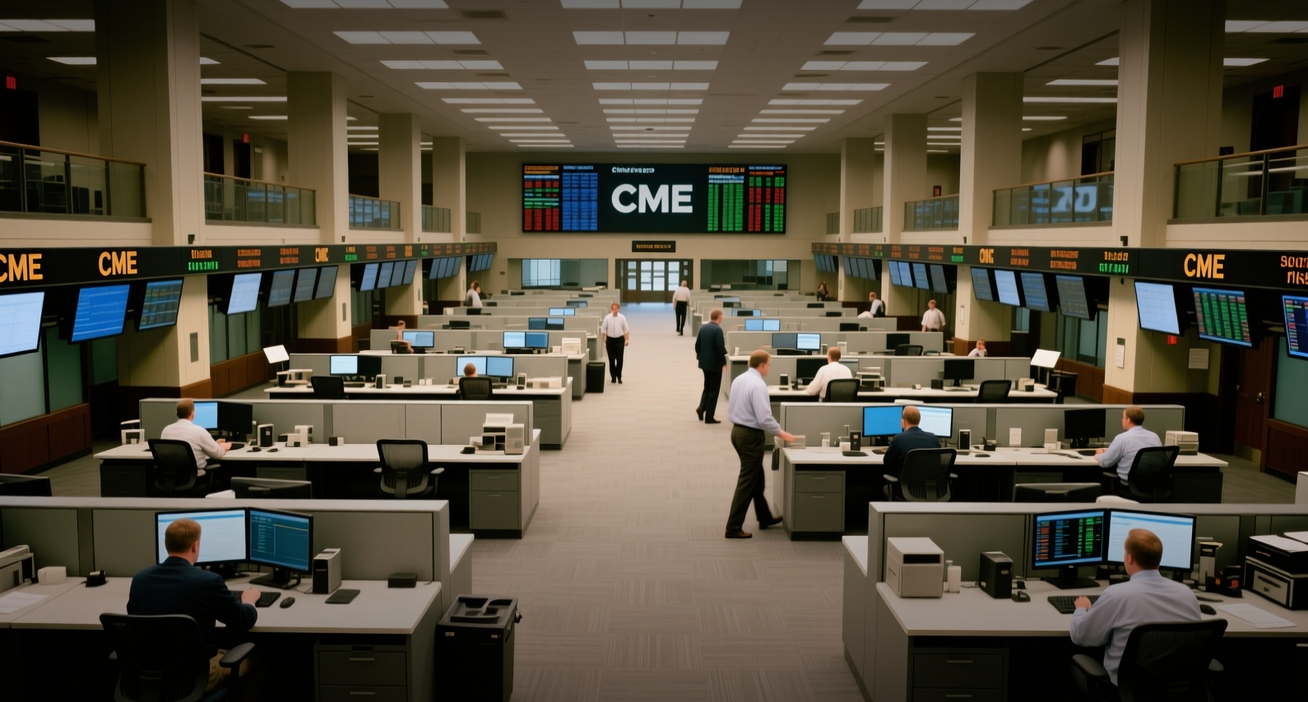
Hyperliquid's round-the-clock trading is pushing CME Group toward a 24/7 oil market, CEO Terry Duffy said.
CME Group CEO Terry Duffy said at a CFTC meeting on Aug. 20 that Hyperliquid's 24/7 trading model is reshaping US market standards, prompting the world's largest derivatives exchange to propose a round-the-clock oil market. Duffy acknowledged the decentralized platform remains off-limits to US participants, yet users still reach it through VPNs, making its influence on traditional finance measurable despite its legal status.
"While this product may be dubbed futures, they function more like leveraged spot products," Duffy said, describing perpetual contracts as "highly engineered instruments that rely on frequent funding rate adjustments that revert the position back to the spot price."
Global perpetuals trading is pacing around $150 billion of notional per day, down from last year because crypto performed poorly, CNBC's Oliver Renick said Aug. 21. The market is booming because perpetuals are shifting to commodities and indexes like the S&P 500, he said. CME, with a market capitalization of roughly $98.9 billion, has drafted contract specifications and built full launch capability for perps despite Duffy's public skepticism.
The classification decision now sitting at the CFTC will reshape what leverage looks like for ordinary US traders. Duffy argued that under Dodd-Frank, any product where two parties exchange funding payments "is a swap contract," and swaps "need to be margined for five days" rather than the one-day standard for cleared futures. A five-day margin requirement effectively prices 50x retail leverage out of existence.
Duffy predicted 24/7 trading will eventually extend across financial markets, including traditional banking systems and government oversight structures. He said adoption is a matter of timing rather than a question of possibility.
Alongside CME's pivot, Kalshi's pending compute-related prediction market has faced approval delays, even though a comparable compute prediction product already received CFTC approval for a different US entity. Cantor Fitzgerald's recent partnership with Kalshi on compute offerings has added scrutiny to the timing, with observers questioning whether the two events are connected.
Enforcement concerns tie back to Hyperliquid's continued accessibility. Questions remain over how regulators can realistically police VPN usage among US traders. Without effective enforcement tools, restrictions on platforms like Hyperliquid may carry limited practical weight.
President Trump said this week that Hyperliquid could be brought into compliance with US regulations, reopening a debate the industry has spent a year trying to settle. The realistic outcome is that the CFTC eventually classifies most perp designs as swaps for margining purposes, which would push US-compliant versions toward lower leverage caps and drive listing rights to established venues like CME under its index licenses.
This article is for informational purposes only and does not constitute investment advice.
