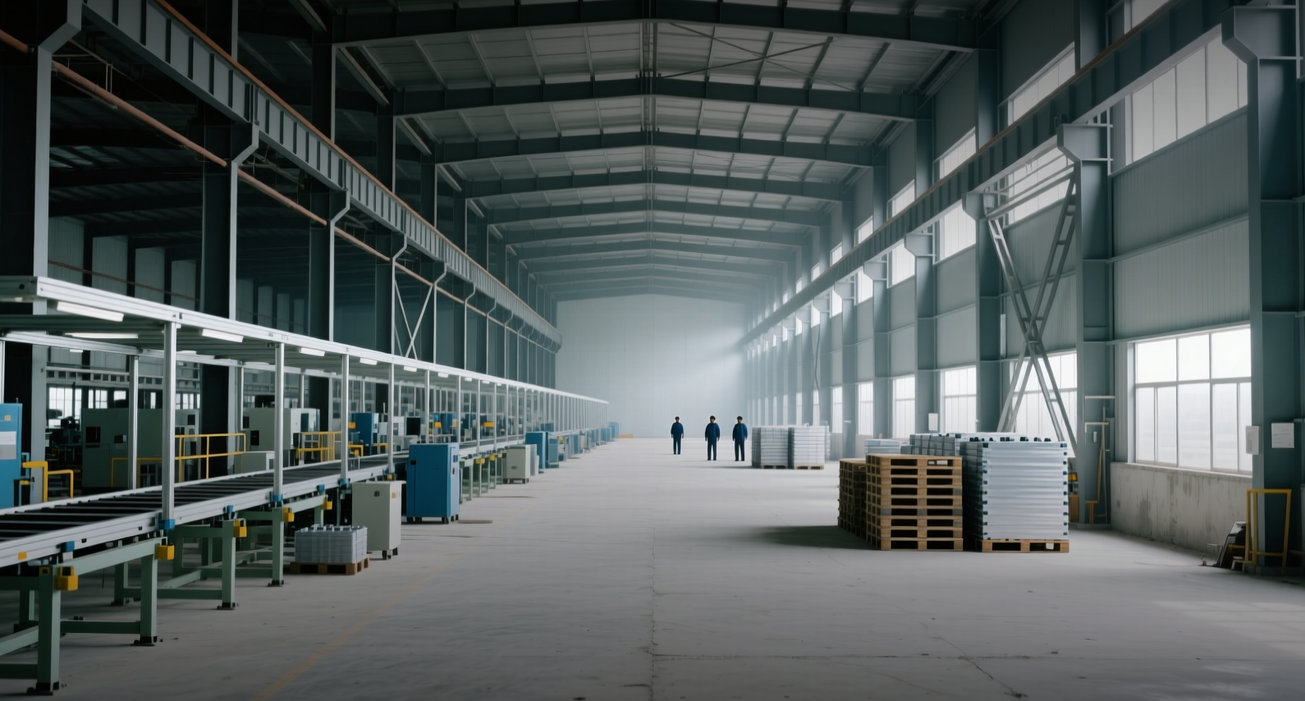
The Transportation Secretary has put Ford's China-linked battery strategy on notice. In a letter dated Sept. 8 and made public Tuesday, Sean Duffy told Chief Executive Jim Farley that the automaker's licensing of LFP cell technology from Contemporary Amperex Technology Co. — the arrangement powering its BlueOval Battery Park Michigan plant, a facility representing billions of dollars in investment and roughly 1,700 jobs — leaves a foundational American brand "actively intertwining its future with Chinese state-backed enterprises."
"When a company intentionally chooses to deepen operational dependencies on strategic competitors, it fails to act as the reliable partner the American public and this DOT require," Duffy wrote. "Iconic American companies, like Ford, are also expected to out-innovate competitors. To that end, they need to chart clear paths to technological self-reliance."
The letter cites three areas of concern beyond the CATL licensing: Ford's joint venture with Chinese automaker Geely in Valencia, Spain, the delayed reshoring of Lincoln models such as the Nautilus until 2030, and reported talks with BYD for hybrid vehicle components. Duffy said such moves "help strategic adversaries secure a vital foothold in Western markets" and challenge "the spirit of American national and economic security and supply-chain independence policies."
Ford fired back within hours, calling the letter "a wrongheaded attempt to capture headlines at the expense of a company that has done more for American manufacturing than virtually any other in the nation's history." The automaker said the Marshall plant is "Ford-owned and Ford-operated," and that the CATL arrangement is "a limited technology-licensing and services agreement, not a joint venture or foreign-owned manufacturing operation." Ford also said the letter "contains factual errors," including a claim that it proposed a joint-venture framework on US soil, which the company denies.
The exchange marks the sharpest public confrontation between the Trump administration and a major US automaker over China exposure since the president took office. Ford has maintained that licensing CATL's LFP chemistry is essential to producing lower-cost batteries domestically, arguing that its competitors continue to import Chinese cells outright. The company said it supports the administration's vision for American manufacturing and that it would have shared more details had Duffy reached out before releasing the letter to the press.
The regulatory risk extends beyond Ford. Duffy's letter signals that the administration is prepared to use federal agencies to pressure US companies over Chinese technology partnerships, a posture that could ripple across the automotive sector and beyond. General Motors, which operates joint ventures in China, and Tesla, which sources battery components from Chinese suppliers, face similar exposure to shifting policy. For Ford specifically, the stakes are concentrated: the Marshall plant is central to its plan to cut EV battery costs and compete with lower-priced Chinese and Korean rivals, and any forced restructuring of the CATL agreement would disrupt that timeline.
What happens next is unclear. Duffy's letter does not specify enforcement action, and the Department of Transportation's regulatory authority over a private company's technology licensing arrangements is limited. But the letter puts Ford on notice that its China strategy is under active review, and the administration has shown willingness to use procurement, tariff, and national-security tools to pressure companies into compliance. Ford's stock has come under pressure as investors weigh the possibility of regulatory action, though the company has not disclosed any formal investigation or penalty.
Ford's response — combative, detailed, and pointed — suggests the automaker believes it can weather the political storm by emphasizing its US manufacturing footprint. Whether that calculation holds depends on whether Duffy's letter is a one-off warning or the opening move in a broader enforcement campaign. For now, the 1,700 workers at Marshall and the billions Ford has committed to the plant sit at the center of a dispute that pits the administration's China policy against the realities of the global battery supply chain.
This article is for informational purposes only and does not constitute investment advice.