Icelanders voted 52.8% to 47.2% against restarting EU membership talks, rejecting a government push to anchor the island to Brussels as Arctic security concerns mount.
Icelanders rejected restarting European Union membership negotiations by 52.8% to 47.2% in a Saturday referendum, dealing a setback to Brussels' enlargement agenda and to a government that framed the vote as a "now or never" moment.
"The most important thing is that we come out of this united," Prime Minister Kristrún Frostadóttir said Sunday, adding her government would respect the outcome and not pursue negotiations during its current term, which ends in 2028.
Reykjavik was the only region to back the referendum, with turnout ranging from about 60 percent in the capital to more than 80 percent in rural districts. The result matched a Gallup poll published Friday that put the "no" camp at 51.6 percent, within the statistical margin of error.
The outcome is a blow for the EU, whose leaders are eager to show the 27-member bloc can still absorb new members after the U.K.'s 2020 exit. Iceland, one of Europe's richest nations per capita, would have had an easier path to membership than other hopefuls given its economic and political stability, and some officials had cast it as a low-risk case that could ease scepticism toward enlargement.
The vote marked the first time Icelanders had been asked about EU negotiations in a referendum. Iceland first applied to join the bloc in 2009 after the collapse of its major banks plunged the economy into its deepest recession since independence in 1944, but a eurosceptic government froze the talks in 2013 over control of the country's fishing industry.
The debate shifted sharply during the past year after U.S. tariffs sparked a breakdown in global trading norms and President Donald Trump amplified his talk of acquiring Greenland, Iceland's closest geographic neighbor. Frostadóttir moved the referendum forward from a promised 2027 date, saying in a televised debate that "we are seeing the United States use tariffs as instruments of trade coercion and as a weapon."
Iceland is already deeply tied to Europe as a member of the European Economic Area, which extends the EU's single market beyond the bloc. The EU takes two-thirds of Iceland's exports while the U.S. accounts for 9 percent, according to World Trade Organization data — a dependence supporters said left Reykjavik with little say over trade decisions made in Brussels.
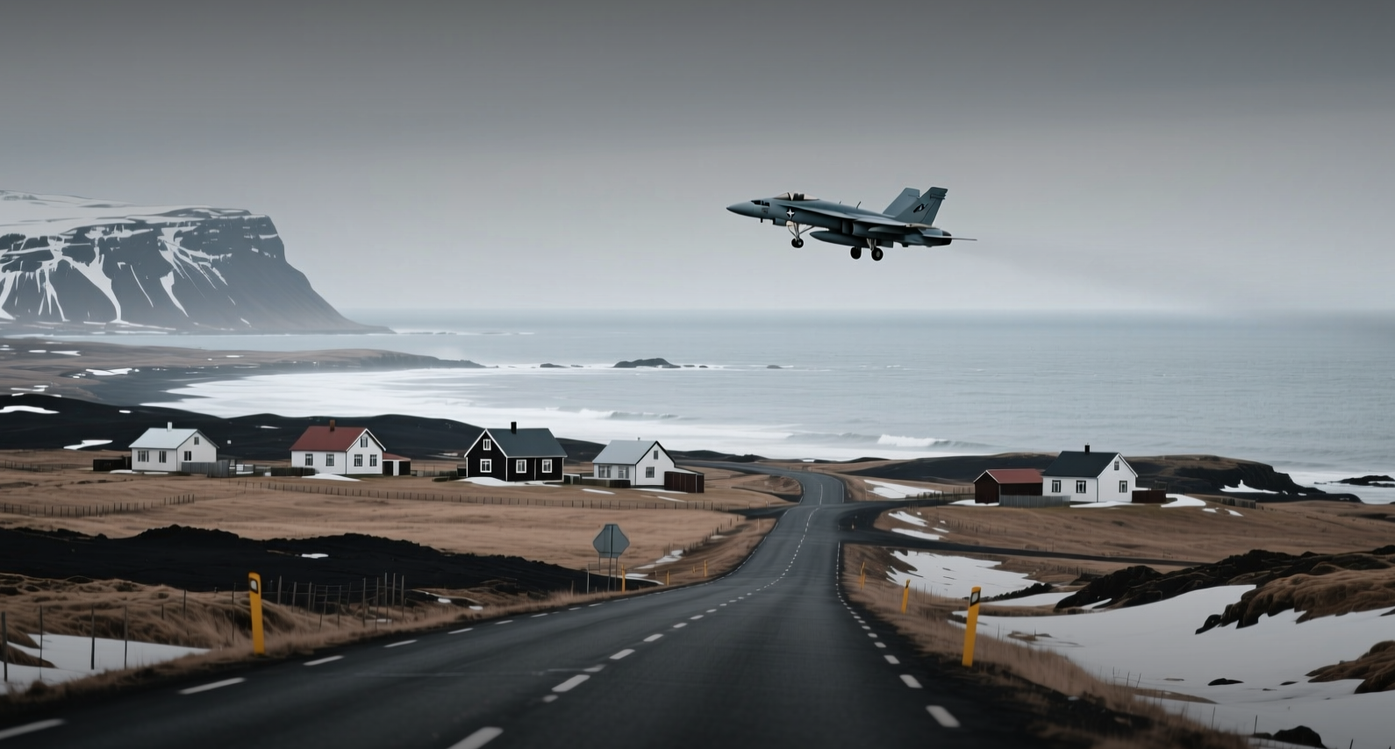
The island nation of about 400,000 people has no military of its own and relies on its founding membership in NATO and a defense pact with the U.S. for security. Washington withdrew from the Keflavik air base in 2006, though NATO countries still rotate fighter and surveillance aircraft there to track Russian submarines and warships. Iceland began allowing U.S. nuclear-powered submarines into its territorial waters in 2023.
Opponents of the talks argued the bloc could offer little additional protection and that EU membership would threaten sovereignty over the country's prized fishing waters. Industry representatives said the EU's common fisheries policy would interfere with Iceland's ability to set catch levels and fishing grounds, although EU officials had signaled flexibility before the vote.
Supporters pointed to adopting the euro to ease inflation and the high cost of living. Iceland's annual inflation hit 5.6 percent in July based on EU methodology, well above the average in the euro area, and "yes" campaigners argued that joining the bloc could ease high interest rates and offer more security in a world unsettled by war in Ukraine.
Frostadóttir said the government would continue cooperating with the EU but would not pursue negotiations during its current term. A "yes" result would have required a second referendum after talks concluded, as well as approval by all existing members — a path now shelved until at least 2028, leaving the EU's longest-ever expansion hiatus, now at 13 years, intact.
This article is for informational purposes only and does not constitute investment advice.