
Japan's 30-year government bond auction on Thursday tests investor confidence in Takaichi's fiscal agenda as yields near records, with a weak result risking global fixed-income spillover.
Japan's 30-year government bond auction on Thursday tests investor confidence in Takaichi's fiscal agenda as yields near records, with a weak result risking global fixed-income spillover.
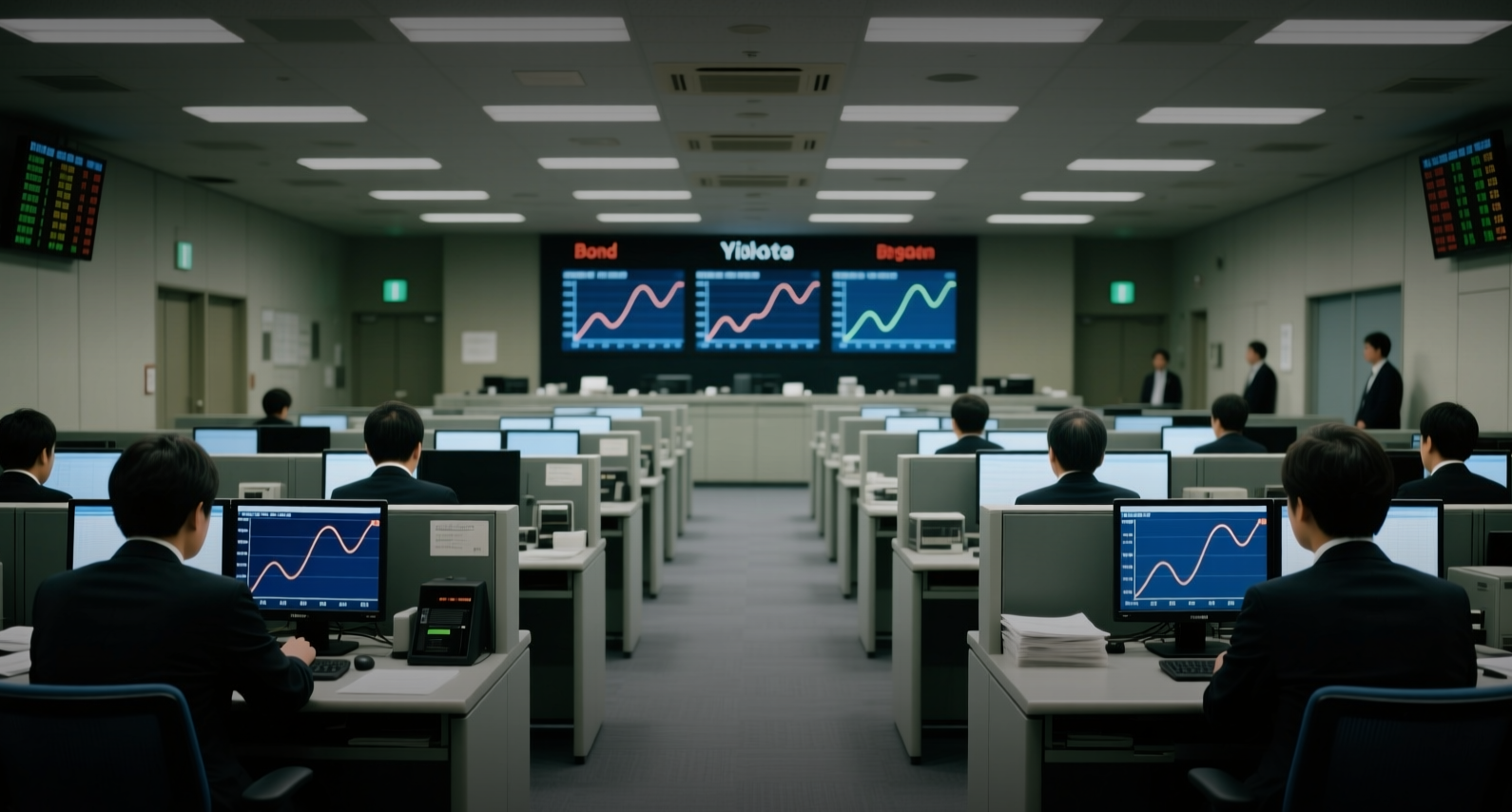
Japan's 30-year government bond yield has climbed to 4.155 percent, near its record since the tenor debuted in 1999, as Prime Minister Sanae Takaichi's expansionary fiscal agenda and Bank of Japan tightening signals converge ahead of Thursday's auction.
"JGBs were long the anchor of global fixed income, but that logic has reversed — a further extension of the selloff could trigger a repricing across global bond markets," said Prashant Newnaha, senior Asia-Pacific rates strategist at TD Securities.
The 10-year JGB yield touched 3 percent this week for the first time since 1996, while the 2-year yield reached 1.830 percent, the highest since 1995, after BOJ Governor Kazuo Ueda said the board would debate raising rates at its September 17-18 meeting. Government departments submitted record budget requests for the next fiscal year, deepening concern about Japan's debt trajectory — its debt-to-GDP ratio now far exceeds levels when the 10-year yield last traded at 3 percent.
A weak auction result would complicate US Treasury Secretary Scott Bessent's efforts to manage long-end rates, with the Japan-US 30-year yield spread at risk of falling below 100 basis points, according to Bloomberg strategist Mark Cranfield. Barclays expects the auction to land weak-to-moderate, while SMBC Nikko's Miki Den sees a result between moderate and weak, citing insurer demand as a partial offset.
Ueda told reporters after the G20 finance leaders' gathering in Asheville, North Carolina, that the BOJ "hopes to continue raising interest rates as financial conditions remain accommodative," while noting the bank has already raised rates five times. His remarks followed a statement from the US Treasury Department saying Bessent met Ueda and called for "decisive" monetary steps to combat the weak yen.
Hawkish BOJ board member Hajime Takata reinforced the tightening bias, saying the central bank should raise rates nimbly in response to inflationary pressures rather than at a fixed semiannual pace. Underlying inflation is running close to the BOJ's 2 percent target and is seen heading toward 3 percent later this year, according to the Bloomberg report.
The fiscal backdrop has compounded the monetary pressure. Takaichi's government has submitted record budget requests for the next fiscal year, and investors are increasingly pricing in a structural deterioration in Japan's public finances. Newnaha noted that the sustained rise in 30-year yields could shift market focus from monetary policy back to fiscal policy — a dynamic Japan has not faced in decades given its debt-to-GDP ratio is far higher than when the 10-year yield last traded at 3 percent.
Barclays strategist Ayao Ehara and colleagues expect the overall auction result to be weak-to-moderate, noting that while current yield levels are not far from fair value based on long-term factors, fiscal concerns remain a drag. SMBC Nikko's Den pointed to some support: the previous two 30-year auctions held at roughly 4 percent yields recorded relatively high bid-to-cover ratios, and life and non-life insurers have accelerated purchases of super-long bonds in recent weeks.
However, Den cautioned that investors remain reluctant to extend duration while the trajectory of yields is unclear, and she expects the result to land between "moderate" and "weak."
The auction comes as global long-end rates rise and oil prices surge, creating an adverse backdrop. If the result disappoints, the impact could extend well beyond Japan. Newnaha warned that a further JGB selloff could trigger a repricing across global fixed-income markets, while Cranfield flagged the risk of the Japan-US 30-year yield spread breaking below 100 basis points — a level that would complicate Bessent's efforts to suppress US long-end rates. Higher global borrowing costs would in turn pressure risk assets from equities to emerging-market debt, extending the transmission chain beyond Japan's borders.
This article is for informational purposes only and does not constitute investment advice.
