


OpenAI's enterprise Agent platform Presence triggered a 12% selloff in HubSpot and a near-12% drop in Atlassian, signaling that AI models are moving from selling intelligence to directly competing with SaaS applications.
OpenAI's enterprise Agent platform Presence triggered a 12% selloff in HubSpot and a near-12% drop in Atlassian, signaling that AI models are moving from selling intelligence to directly competing with SaaS applications.
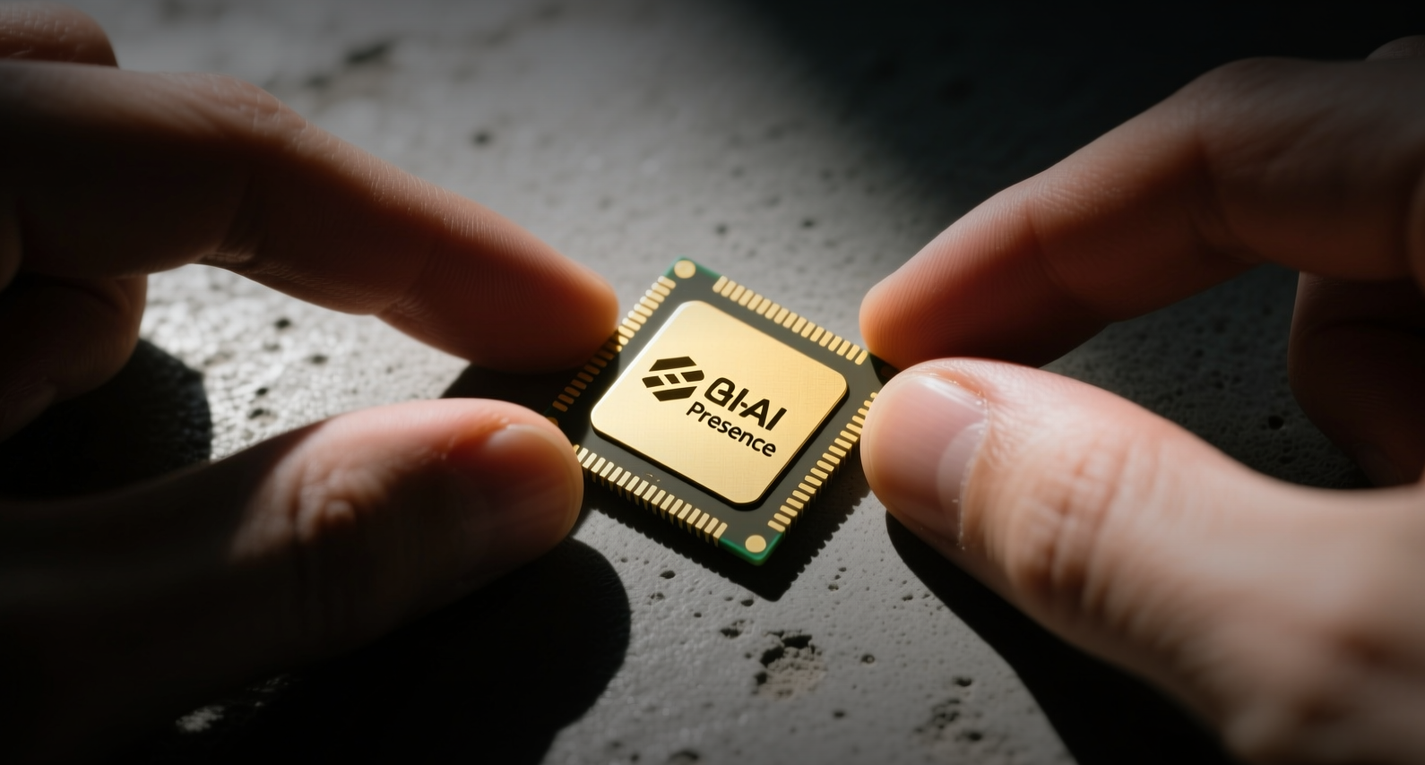
OpenAI's launch of Presence, an enterprise Agent platform that directly competes with Salesforce, HubSpot and Atlassian, triggered a combined $15 billion-plus selloff in SaaS stocks, signaling that AI models are no longer just powering software — they are replacing it.
"The market is pricing in a structural shift where the model becomes the application layer," said Alex Nguyen, enterprise AI analyst at Edgen. "When OpenAI can handle customer service, billing and internal workflows through a single Agent, the value of a dozen separate SaaS subscriptions comes into question."
HubSpot fell more than 12%, while Atlassian dropped nearly 12% on the news. Salesforce and Okta also declined. The selloff reflects a market reassessment of software companies whose core value — user interface, workflow logic and data integration — can increasingly be absorbed by large language models. OpenAI disclosed that its enterprise customers' API inference token consumption grew roughly 320 times in one year, reaching more than 15 billion tokens per minute by April 2026.
The shift carries implications beyond software valuations. Agentic AI requires 100 to 1,000 times more tokens per task than traditional chat, turning token consumption into the fundamental fuel of enterprise operations. That demand is cascading through the semiconductor supply chain: SK Hynix posted record quarterly revenue of 79.3 trillion won ($57.8 billion) in Q2 2026, up 257% year over year, driven by HBM and AI server DRAM. Yet the stock fell 17% in a single session as investors priced in oversupply risk from capacity expansions expected by 2027.
Token Demand Reshapes the Infrastructure Stack
The explosion in token consumption is shifting the center of gravity in AI infrastructure from training to inference. While the industry has focused on how many GPUs are needed to train frontier models, the Agent era demands high-frequency, concurrent inference across multiple model calls per task. Chinese open-weight model developer Moonshot AI released Kimi K3, a 2.8 trillion-parameter mixture-of-experts architecture with full open weights, targeting long-context programming and Agent tasks. The model's availability on domestic Chinese accelerators signals that open-weight alternatives are narrowing the gap with closed-source frontier models on specific workloads.
Memory and bandwidth are becoming binding constraints. SK Hynix began mass-production shipments of HBM4 in the second quarter and plans a full-scale ramp in the second half. The company expects DRAM demand to grow in the mid-20% range and NAND demand in the high teens, with supply constraints unlikely to ease meaningfully in the near term because of the complexity of advanced packaging and fab construction lead times. But the market's 17% selloff in SK Hynix shares after record earnings shows that investors are already looking past the current cycle to the risk of oversupply when new capacity comes online in 2027.
Vertical Agents Face a Survival Test
As general-purpose models absorb more capabilities — code generation, tool calling, workflow execution — vertical Agent startups that lack proprietary data or deep domain expertise face an existential question. The value that survives will come from knowledge the base model did not encounter during training: semiconductor fabrication recipes, chemical engineering simulations, clinical trial protocols and other industry-specific data accumulated over decades.
Some enterprises are already moving to protect that knowledge. Open-weight models deployed on private infrastructure allow companies to keep proprietary data isolated from the training sets of closed-source providers. But private deployment comes with a capability trade-off: even the best open-weight models lag frontier closed models on certain benchmarks. The result is a strategic tension: companies must choose between model performance and data sovereignty, while model providers must decide whether to monetize through paid APIs or risk their technology being used for free.
More than 1,100 employees from OpenAI, Anthropic, Google and other AI labs signed an open letter on July 29 calling for international coordination on frontier AI safety, including mechanisms to collectively slow development when risks escalate. The letter underscores a growing recognition that as agents gain autonomy — and the ability to execute real-world actions across systems — the safety challenge shifts from theoretical to operational.
This article is for informational purposes only and does not constitute investment advice.
