PIMCO's Balanced Income and Growth Fund, up more than 10 percent in the first half, concentrated 60 percent of its equity in Asian AI suppliers while trimming US tech megacaps.
PIMCO's Balanced Income and Growth Fund, up more than 10 percent in the first half, concentrated 60 percent of its equity in Asian AI suppliers while trimming US tech megacaps.
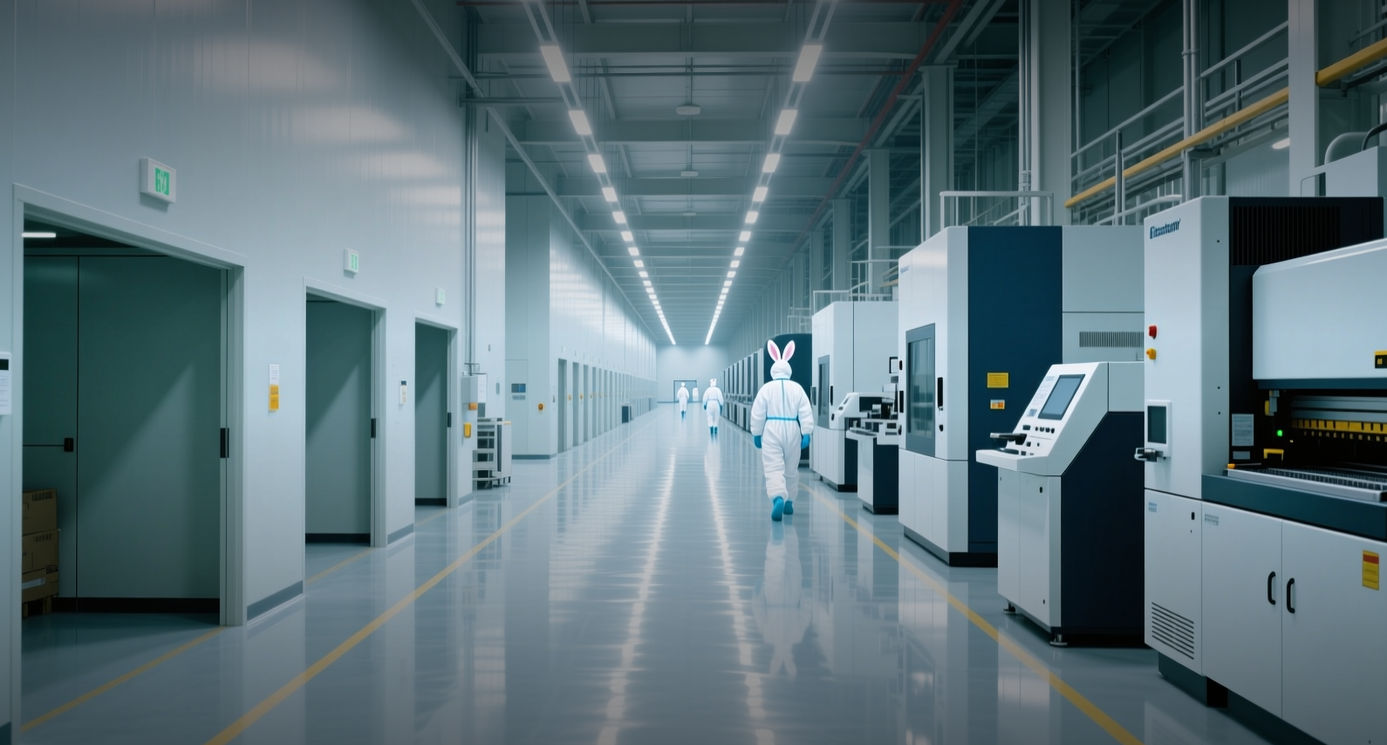
PIMCO's Emmanuel Sharef has cut exposure to most hyperscalers and Magnificent Seven members, shifting roughly 60 percent of his flagship fund's equity allocation into Samsung Electronics, SK Hynix and TSMC as AI capital spending erodes US tech balance sheets.
"You don't necessarily need to own the most expensive stocks in order to capture a particular theme or a particular market trend," Sharef, portfolio manager of the PIMCO Balanced Income and Growth Fund, said in an interview from Singapore.
The fund, with nearly $19 billion in assets, has outperformed 97 percent of peers over the past three years, according to data compiled by Bloomberg. It drew more than $10 billion of inflows in the first half, more than doubling assets since the end of 2025 to $16.3 billion as of June 30, and returned more than 10 percent after fees in the period after a 21.65 percent gain last year.
The repositioning reflects a reassessment of the AI trade, where relentless capital expenditure is pushing up debt burdens and squeezing free cash flow at the largest US technology companies. Sharef argues the next leg of returns will flow to Asia's "pick-and-shovel" suppliers that build the physical infrastructure behind data centers.
The fund's 60/40 split between stocks and bonds uses a systematic strategy based on value, quality, momentum and growth when selecting individual equities. Sharef's conviction rests on how AI capital expenditure transmits through the supply chain: as data centers expand, demand rises for semiconductor components, cooling equipment, cabling, optical devices, power supplies, construction machinery and metal materials.
Asian semiconductor and infrastructure companies offer a dual advantage, Sharef argues. TSMC holds a near-monopoly on AI accelerator manufacturing as the world's most advanced chip foundry, yet trades at a far lower price-to-earnings ratio than most US tech giants. SK Hynix leads in high-bandwidth memory, while Samsung spans memory chips, foundry services and end-user devices. The fund bought all three aggressively last year.
The rotation is not confined to chips. In China, the fund's largest sector exposure is financials, chosen for their comparatively lower volatility, while Sharef has been building positions in biotech and life sciences for roughly 18 months, betting AI could accelerate drug discovery. He is also positive on materials stocks, noting Chinese resource extraction and materials companies matter not just for data-center construction but for rare earths. The MSCI China Materials Index has climbed about 7.1 percent over the past month, outperforming most major industry groups as rallies in gold and copper turned one of this year's laggards into a market leader.
The strategy carries risks. Asian supply-chain companies face geopolitical uncertainty, cyclical industry swings and shifts in technology roadmaps. The capital-intensive nature of semiconductor manufacturing means a slowdown in AI investment would hit earnings at these firms materially.
Sharef's move echoes a broader institutional reassessment. The fund's $14 billion of net inflows since the start of 2025 led the runner-up, the Allianz Income and Growth fund, by almost three times, according to Morningstar data tracking 250 funds with similar asset breakdowns. Wealthy clients in Taiwan, Hong Kong, Singapore and mainland China are among the top investors this year, according to Marcio Bogoricin, Pimco's head of global wealth management for Asia excluding Japan.
The fund has already begun trimming its Samsung, SK Hynix and TSMC positions this year and is scouting equipment suppliers in markets outside the US, such as Japan, Bogoricin said. The question for investors is whether the AI trade's next phase rewards the architects or the contractors. Sharef's bet is that the suppliers get paid before the prospectors discover whether there is enough gold in the ground — and that the market's pricing logic for US tech giants shifts as AI capex moves from growth driver to financial burden.
This article is for informational purposes only and does not constitute investment advice.
