

Super Micro Computer is shifting its AI strategy from hyperscale training to edge inference, a pivot that opens a broader addressable market as its stock has lost nearly a third of its value in four weeks.
Super Micro Computer is shifting its AI strategy from hyperscale training to edge inference, a pivot that opens a broader addressable market as its stock has lost nearly a third of its value in four weeks.
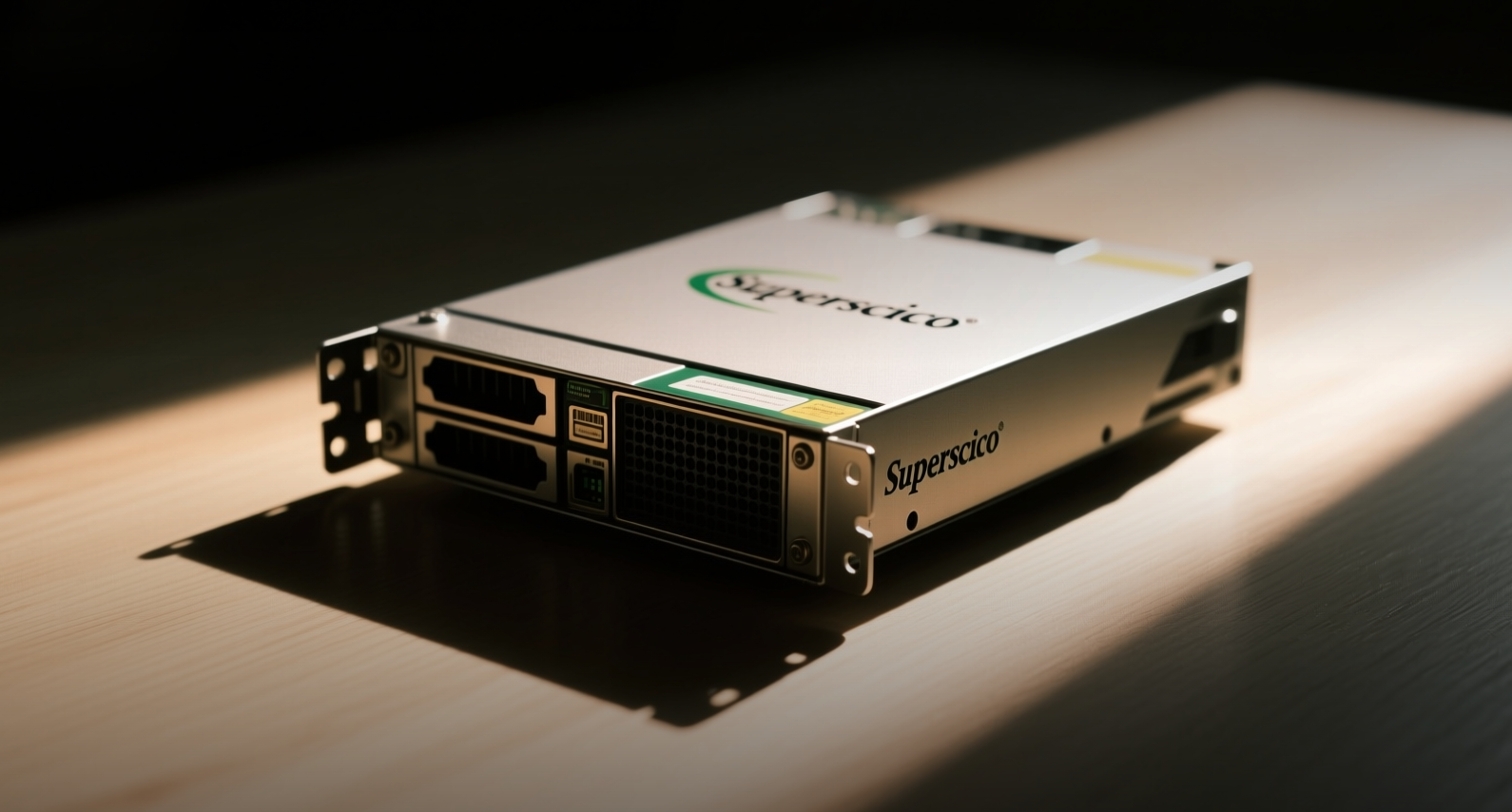
Super Micro Computer Inc. is pivoting from centralized hyperscale AI training to edge inference and enterprise solutions, a strategic shift that targets thousands of potential customers beyond the handful of cloud giants driving its recent growth.
"Supermicro's transformation into a total datacenter infrastructure provider is accelerating," Chief Executive Officer Charles Liang said in the company's Q3 FY2026 earnings call, as the company outlined its push into edge deployments.
The Santa Clara, California-based company has partnered with Red Hat and Everpure to deliver pre-validated Kubernetes Edge AI appliances that combine Supermicro's hardware with Red Hat OpenShift and Portworx storage. The appliances target retail, manufacturing, telecommunications and remote business operations — environments where AI inference must run locally rather than in centralized data centers. The company reported Q3 FY2026 revenue of $10.24 billion, up 122.7 percent year over year, with earnings per share of $0.84 beating the $0.62 consensus.
The inference market is expected to be larger than training over the long term, and the pivot could expand Supermicro's addressable market from a handful of hyperscale customers to thousands of enterprise clients. The company trades at 15 times trailing earnings, a discount to Dell Technologies at 36 times and Hewlett Packard Enterprise at 45 times, reflecting the governance and execution risks that have weighed on the stock.
The edge AI push comes at a critical juncture. The stock has fallen 29 percent over the past month, driven by a $7 billion equity financing announcement on June 10 that triggered a 28 percent single-day drop, followed by headlines about Taiwan raids on offices linked to an expanding Nvidia AI chip smuggling probe. Insider activity shows net selling across 102 recent transactions, and analyst ratings reflect the caution: 5 Buy, 10 Hold, 3 Sell.
The partnership with Red Hat and Everpure addresses a genuine gap in the market. Organizations deploying AI across geographically dispersed facilities — retail outlets, manufacturing plants, telecom facilities — have struggled with the complexity of managing inference workloads outside centralized data centers. The pre-validated appliance integrates Kubernetes, storage infrastructure and edge computing hardware into a single package, reducing deployment time for customers with limited on-site technical resources.
Rivals Capitalize on AI Server Boom
While Supermicro navigates its challenges, competitors are surging. Dell Technologies reported Q1 FY2027 revenue of $43.84 billion, up 88 percent year over year, with AI-optimized server revenue of $16.13 billion growing 757 percent. The company booked $24.4 billion in AI orders in a single quarter and raised its full-year revenue guidance to as much as $169 billion. Dell stock has gained 19 percent over the past month.
Hewlett Packard Enterprise has also outperformed, with shares jumping 9 percent on a recent M&A announcement aimed at roughly doubling its networking business. The company posted Q2 FY2026 revenue of $10.68 billion, up 40 percent year over year, with networking revenue of $2.69 billion growing 148.2 percent following the Juniper Networks integration.
Supermicro's shift to edge inference positions it to capture the next wave of AI adoption as enterprises deploy AI at the network edge. The inference market is projected to surpass training in total spending over time, as trained models are deployed across millions of edge locations. If successful, the strategy could drive revenue growth and margin expansion beyond what the hyperscale training market alone can provide.
The analyst consensus target of $37.25 implies roughly 29 percent upside from current levels near $28.82, but the path depends on execution. The company's board is conducting an independent review, and the outcome of the Taiwan probe remains uncertain. For investors seeking cleaner AI infrastructure exposure, Dell and Hewlett Packard Enterprise offer stronger near-term momentum, though at higher valuations.
This article is for informational purposes only and does not constitute investment advice.
