

Key Takeaways: The Treasury doubled bond buybacks to $4 billion per operation, but the market priced the move as plumbing, not policy — 30-year yields are back near 5.2%.
Key Takeaways: The Treasury doubled bond buybacks to $4 billion per operation, but the market priced the move as plumbing, not policy — 30-year yields are back near 5.2%.
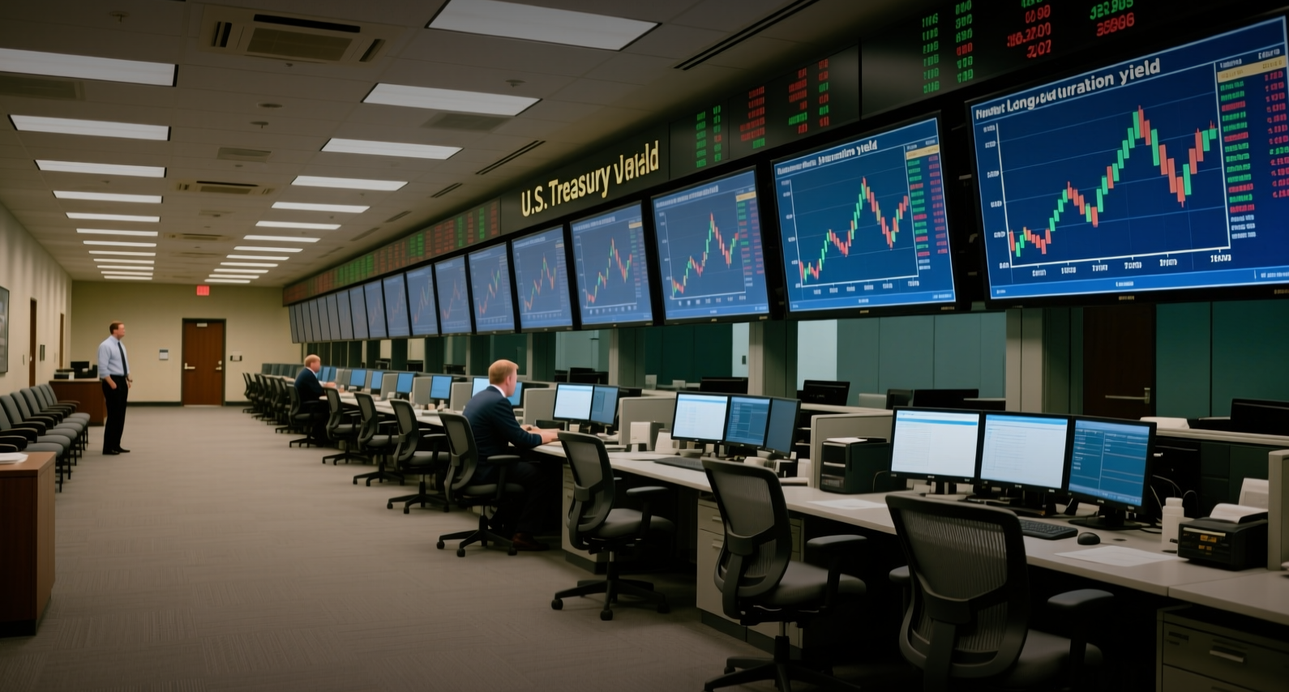
Treasury Secretary Scott Bessent doubled the government's bond buybacks to at least $4 billion per operation, yet the 30-year yield has climbed back toward 5.2% as investors conclude the move cannot fix a $40 trillion debt overhang.
"Bessent is running the same playbook Yellen used in 2023: shifting how the government finances its debt in a way that pushes dollar liquidity into markets, and eventually into Bitcoin," said Arthur Hayes, former BitMEX chief executive who now runs crypto investment fund Maelstrom.
The 30-year yield hit 5.34% on Aug. 19, its highest since 2007, before the Treasury announced it would double buybacks from $2 billion to at least $4 billion per operation across the 10-to-20-year and 20-to-30-year sectors. The announcement initially pushed the 30-year down about 10 basis points and the 10-year down 6 basis points, but by week's end the 10-year stood at 4.73% — near its highest since Bessent took office. Gold rose 1% to $4,652.69 an ounce, its highest in more than three months, while Brent crude fell 2.44% to $92.09 and Bitcoin retreated to $78,740 after approaching $80,000.
The buyback expansion, effective Sept. 9 through Nov. 4, is funded by issuing new short-term bills — a maturity swap that pushes T-bills to about 22% of outstanding marketable debt, above the 20% ceiling recommended by the Treasury Borrowing Advisory Committee. With the government running a deficit of roughly 6% of GDP and interest costs above $1 trillion a year, the market's verdict is clear: $4 billion per operation cannot absorb the structural supply overhang at the long end.
The Treasury's buyback program, running since May 2024, targets off-the-run securities — older bonds that trade less actively and congest dealer balance sheets. In a recent operation, the Treasury took $1 billion of bonds maturing in 2048 and $1 billion of two bonds maturing in 2051, while investors offered nearly $20 billion to sell. Bessent has called the strategy a "Treasury twist," a nod to the Federal Reserve's 1962 Operation Twist, and has said subsequent operations could be larger.
The cross-asset reaction tells a more nuanced story. Gold gained more than 5% last week and gold-backed ETFs attracted 46.7 metric tons of inflows worth $6.4 billion, their largest weekly demand in 10 months, according to the World Gold Council. The dollar hovered near three-month lows around 98.8. Oil retreated more than $2 a barrel as traders took profits after two weeks of gains, with Morgan Stanley analysts projecting Brent could peak at $100 in the fourth quarter. Fewer than 20 commodity vessels transited the Strait of Hormuz over the weekend as U.S.-Iran tensions constrained shipping.
Bessent's sanctions push against Iran — described as an "economic D-Day" targeting more than 60 entities across digital assets, technology, gold, aviation and shipping — adds a geopolitical layer to the debt management story. The Treasury could sanction a major financial institution over Iran ties by the end of the week, Bessent said. Meanwhile, the Federal Reserve has been conducting reserve management purchases primarily in Treasury bills since early 2026, creating a potential second-round channel: if the Treasury shifts more financing to the front end and money market conditions tighten, the Fed may need to expand those purchases.
The buyback operations begin Sept. 9. The more meaningful test comes in November, when the next Quarterly Refunding is scheduled — if Bessent expands the program again, the market may start building in a floor below which yields don't fall. For now, the 10-year yield above 4.7% tells investors the bond market expects the government's borrowing habit to persist. If it drops below 4.3%, either the fiscal picture improved, the economy cooled faster than expected, or a new buyer emerged for long-duration U.S. debt.
Bitcoin's retreat from $80,000 raises questions about whether the rally can sustain. Charles Schwab's Jim Ferraioli noted that $6.4 billion in leveraged short perpetual futures positions had been liquidated since Wednesday. "Ultimately, short squeezes tend to be short lived," he said, adding that Bitcoin futures moving into backwardation suggests some hedge funds may be pursuing basis trades rather than directional bets.
This article is for informational purposes only and does not constitute investment advice.
