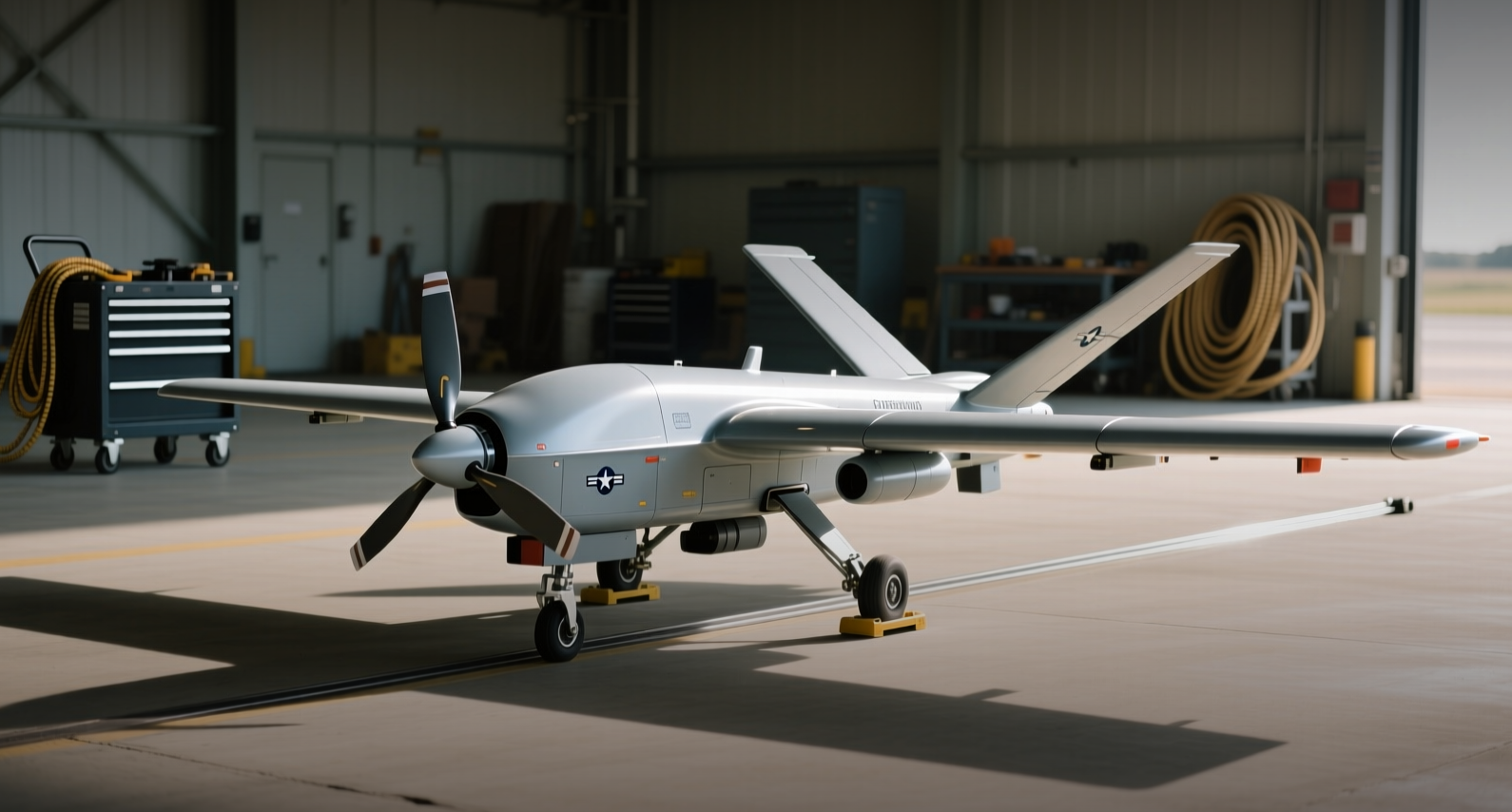
Volatus Aerospace won a five-year Government of Canada contract to supply Low-Cost Tactical Intelligence, Surveillance and Reconnaissance uncrewed aircraft systems to the Canadian Armed Forces, an award that starts at 100 systems under a procurement framework capped at C$25 million and leaves Canada holding options on as many as 4,900 more.
The Mirabel, Québec-based company was selected through the first Request for Proposal issued under Stream 1 of the government's Defence Drone Initiative Marketplace, covering uncrewed and autonomous systems and counter-UxS. It is Volatus' first conversion of its DDI qualification into a Canadian Armed Forces contract, after the company qualified across all five DDI work streams.
"Canada is seeking sovereign, secure and supportable defence technologies that can be fielded efficiently and scaled as operational requirements evolve," Glen Lynch, chief executive officer of Volatus, said. "It validates the strength of our integrated model, which extends beyond aircraft delivery to include payload integration, training, sustainment and technical support."
The economics of the framework are set by the government, not the vendor. Ottawa established a maximum price of C$5,000 per system and a maximum procurement envelope of C$25 million, which together imply a ceiling of roughly 5,000 units. Volatus said its contracted pricing remains commercially confidential, so the gap between the C$5,000 cap and its actual unit price is not disclosed.
The 4,900 optional systems are not backlog
The headline number is the option, not the order. The initial tranche of 100 systems is the only committed purchase; the additional 4,900 units sit at Canada's sole discretion and are subject to separate government requirements, approvals and contract amendments. Volatus stated explicitly that the optional systems are not committed purchases, backlog or revenue.
That distinction matters for anyone modelling the award. At the C$5,000 ceiling, 100 systems represent about C$500,000 of framework value — roughly 2 percent of the C$25 million envelope. The remaining 98 percent depends on Canada exercising options that carry no contractual obligation. Delivery of the initial tranche is expected to begin in the fourth quarter of 2026.
The scope is broader than airframes. The contract covers aircraft, payloads, ground control stations, data links, training, sustainment, spare parts, documentation, and software and firmware support — an end-to-end package intended to give the Canadian Armed Forces a sustainable UAS capability for land forces across a range of missions. Sustainment and training revenue typically carries higher margins than hardware in defence procurement, though Volatus did not break out the revenue split.
Volatus' manufacturing and support footprint is domestic: an Innovation and Manufacturing Hub in Mirabel, Québec, and an Operations Control Centre in Vaughan, Ontario. That positions the company inside Ottawa's stated objective of building a domestic defence industrial base, a criterion that has become more prominent in Canadian procurement as allied governments tighten supply-chain requirements.
Qualification across five streams is the wider option
The award is one contract, but the qualification behind it is a broader asset. Volatus' standing across all five DDI streams lets it compete for future requirements in uncrewed systems, communications, engineering and integration, testing and training, and innovation and experimentation. Each of those opportunities remains subject to a separate Government of Canada procurement process.
The read-through extends past Volatus. Canada's Defence Drone Initiative sits alongside a wider increase in sovereign defence spending across NATO members, a shift that has redirected procurement budgets toward uncrewed systems and domestic suppliers. Peer uncrewed-systems names listed in Toronto and on U.S. exchanges have traded on contract announcements as investors look for evidence that small-cap defence platforms can convert qualification into firm orders.
For Volatus, the near-term revenue contribution is small and the disclosure is thin: no guidance, no margin detail, and no unit pricing. The company trades on the Toronto Stock Exchange under FLT, with U.S. OTCQX listing TAKOF and Frankfurt listing ABB.F. What the market can underwrite today is the qualification and the option pipeline, not the revenue. The next hard datapoint is delivery commencement in the fourth quarter of 2026, followed by any government decision to exercise the first option tranche.
This article is for informational purposes only and does not constitute investment advice.