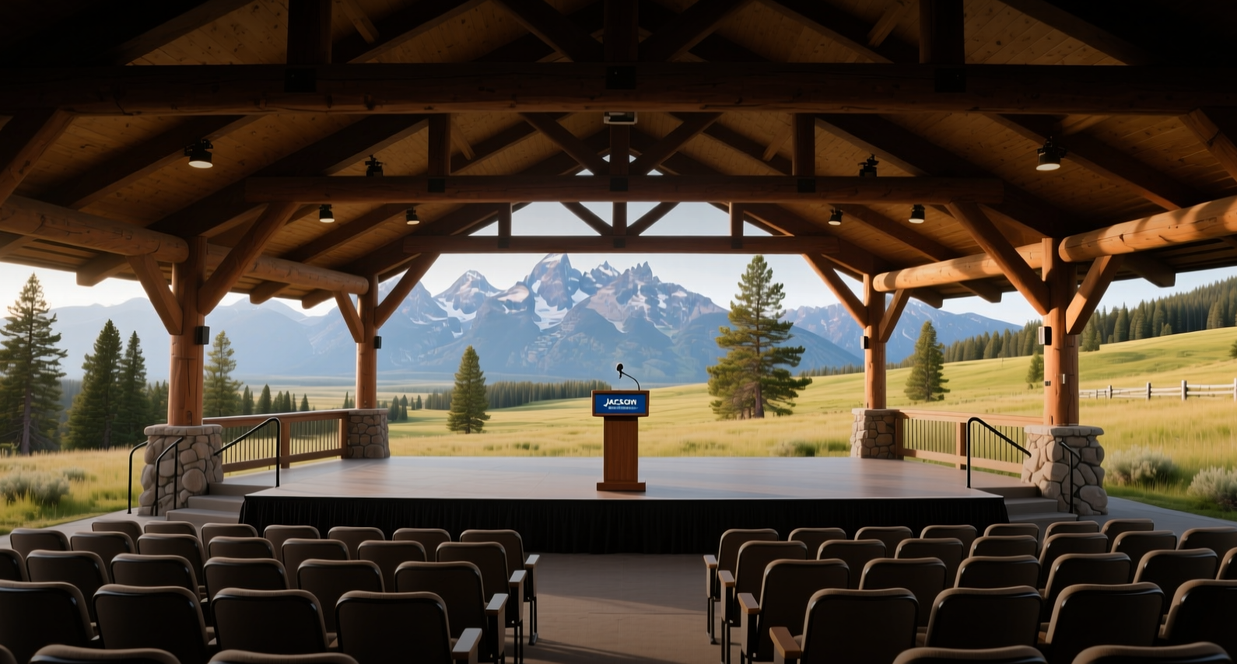
Federal Reserve Chair Kevin Warsh used his first Jackson Hole speech to put inflation back at the center of policy, and markets responded by pricing a September rate hike as more likely than not.
In a hawkish debut at the Kansas City Fed's annual symposium in Wyoming, Warsh said inflation "running above our 2 percent target" makes price stability the Fed's "predominant focus," while refusing to commit to a specific move at the Sept. 15-16 Federal Open Market Committee meeting. "My standard is: we must be confident that underlying inflation is moving to our objective, clearly, and at sufficient speed. Otherwise, we have work to do," Warsh said. "Price stability is not self-executing, nor is inflation necessarily mean-reverting. It is the Fed's job to deliver stable prices."
The market reaction was immediate. Futures pricing for a quarter-point hike at the September meeting jumped to 57.5 percent from 35.4 percent a day earlier, according to CME FedWatch, while the two-year Treasury yield climbed 6 basis points to about 4.3 percent and the 10-year yield rose 5 basis points to 4.72 percent. The dollar strengthened, sending gold down roughly 3 percent to below $4,600 an ounce and the euro to about $1.158, its lowest since Aug. 19. Bitcoin fell from about $79,500 to near $77,000, while the Russell 2000 dropped 1.2 percent, the weakest major U.S. equity index, as the S&P 500 slipped 0.2 percent.
The stakes are high for a Fed that has held short-term interest rates steady all year, with three voting members pushing for a hike at the July meeting. Warsh's speech, his most substantive policy statement since taking office in May, also rejected the forward guidance that his predecessors leaned on, saying the practice had "overstayed its welcome" and that a "quieter Fed, more purposeful in its communications, is better able to meet its objectives." He pointed to government spending and money creation, rather than wages, as the main drivers of inflation, and noted that 54 percent of goods and services in the PCE basket are still running above 3 percent year over year.
A Credible Threat, or a Credibility Test?
Economists read the speech as a deliberate effort to strengthen Warsh's anti-inflation credentials. "Warsh's message was hawkish and clear: the inflation fight isn't over, rates are likely headed higher, and the Fed will be less inclined to telegraph its next move," said Mark Fleming, chief economist at First American. Realtor.com senior economist Jake Krimmel called it "a credible threat," adding that "the question is not if the Fed hikes, but when."
Yet the path is not settled. Goldman Sachs chief economist Jan Hatzius said a September hike is possible if August CPI and PPI come in firmer, but he expects core inflation to print around 0.2 percent and the FOMC to remain on hold. BofA Securities economist Aditya Bhave, who has long called for a September hike, said the onus is now on Warsh to deliver, "else he will probably lose the credibility he gained today." The August CPI report lands Sept. 11, four days before the FOMC decision.
The hawkish tone extends beyond Washington. European Central Bank officials Primoz Dolenc and Martin Kocher signaled a September rate increase, with eurozone inflation estimated at 3.3 percent in August, while Bank of England Governor Andrew Bailey struck a more cautious note, saying the U.K. is seeing "quite modest" second-round inflation effects and that he can "continue to watch" the situation. The divergence, alongside a renewed White House effort to remove Fed Governor Lisa Cook over what her lawyers called "baseless and untrue" mortgage-fraud allegations, adds political uncertainty to an already volatile policy window.
If Warsh follows through with a hike in September, the tightening would mark the first move in a year and could push mortgage rates, already hovering near 6.76 percent for a 30-year loan, higher still. If inflation data soften instead, the Fed keeps its credibility intact but risks the market whiplash that comes with a chair who has pledged to stop telegraphing his next move. Either way, the Sept. 11 CPI print and the FOMC meeting that follows will determine whether Warsh's hawkish debut translates into action.
This article is for informational purposes only and does not constitute investment advice.